Predict the future with the VICTVS Holiday Impact Tracker!

[vc_row][vc_column][vc_column_text]We recently created the VICTVS Holiday Impact Tracker to give our teams an easy to access way to understand the impact of public holidays on every country and on every day of the year.

Our Holiday Impact Tracker displays the level of economic activity in any country on any day.

By using this tool, we are able to assess the likely impact of both seasonal and religious holidays on our work so that our teams can stay one step ahead.

FREE TO USE!  CLICK HERE TO ACCESS

Using the Public Holiday Impact Tracker

To use our Holiday Impact Tracker, simply select a date on the calendar in the top left corner of the map, and the mapping will display the level of economic activity in all countries on the selected day.

When developing this tool, we decided that a simple traffic light system would be the best place to start.  The colour coding is explained below:

  • Green – Full Economic Activity. The country is open for business within normal operating limits.
  • Amber – Medium Economic Activity. This indicates that a country may have moderately limited business, for example on a weekend day in the UK.
  • Red – Limited Economic Activity. Countries showing red are experiencing a significant reduction in business, due to a public holiday or other significant event.

Active Daylight Tracking

On our map, you can also see the time zones as they affect each country.

If you are assessing the global economic activity for today’s date, then the time zones will display active shading that moves each hour to show which parts of the world are in daylight hours and in darkness.

Contribute

If you spot any inconsistencies or errors in our holiday impact tracker, please do leave a comment or contact us below to let us know.

We have already planned a number of additional data layers that we will be building into the map over the coming months – all of which are designed to assist in planning global operations and we would be very pleased to receive your help and advice.

The data visualisation technology behind our Holiday Impact Tracker was built for us by our local digital mapping experts Parallel (also based in Leeds in the UK).  You can read more about their work by visiting their website here.[/vc_column_text][us_separator][/vc_column][/vc_row][vc_row][vc_column][vc_raw_js]JTNDc2NyaXB0JTIwdHlwZSUzRCUyMnRleHQlMkZqYXZhc2NyaXB0JTIyJTIwc3JjJTNEJTIyaHR0cHMlM0ElMkYlMkZ2aWN0dnMucGFyYWxsZWwuY28udWslMkZjb3VudHJ5LWNhbGVuZGFyJTJGZW1iZWQlMjIlM0UlM0MlMkZzY3JpcHQlM0U=[/vc_raw_js][/vc_column][/vc_row]

A light in the dark. VICTVS releases anonymous online corruption reporting tool.

[vc_row][vc_column][vc_column_text]In the course of our work, we frequently discover incidents of malpractice, maladministration and fraud.  Unfortunately, there will always be a minority who are compelled to try to cheat their way to success and whose actions threaten to undermine the efforts of hardworking and honest people.

Recent incidents here in the UK of national exam papers being leaked and sold online, have again shown that nowhere is immune from this type of activity.

Of course, a requirement for effectively responding to corruption, is the action of honest people.  But it’s not always easy to highlight concerns and we understand that many people would prefer to anonymously report an issue so that they can protect themselves from any potential repercussions.

In May this year, we created and launched our new anonymous reporting portal.

This simple form allows users to report any incident to us, with total anonymity.

Our web page does not record the user’s location details and does not require the user to provide their details if they do not wish to do so.

If you or someone you know feels compelled to report something, then we hope that this will help.

VICTVS[/vc_column_text][us_separator][/vc_column][/vc_row]

Better than Candy Crush! The VICTVS mobile phone app launch

[vc_row][vc_column][vc_column_text]That’s right – another mobile app!

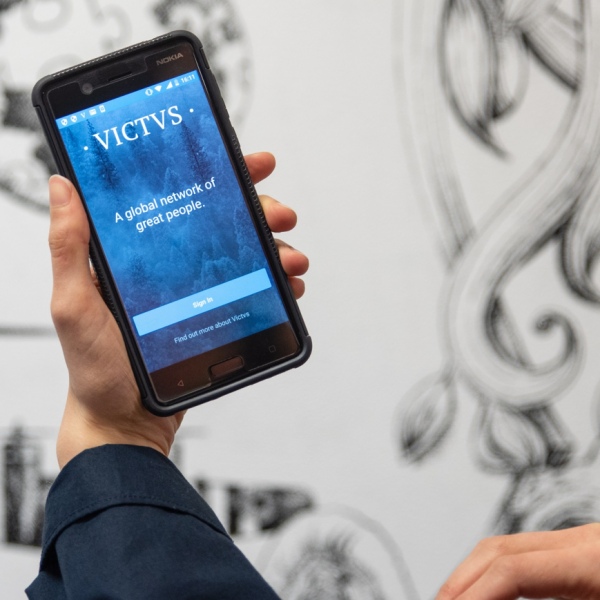
We are very pleased to announce the launch of our own mobile phone app that we have developed with fellow Castleton Mill residents Korelogic.

Our app gives us direct and encrypted communications with the members of our Global Network – even in areas of poor internet connectivity.

The VICTVS app also allows our personnel to connect with us for 24/7 support, to share files relating to their work and to monitor their progress through current projects.

Whist still in its early days, our app has already proved itself to be a very useful tool for remote working and we are already developing additional features.  These include live location tracking that will provide additional security for our people wherever they are.

Members of our network can download the VICTVS app for iOS at the Apple App Store or for Android at Google Play.

*Please note – our app is only accessible to members of the VICTVS Global Network.[/vc_column_text][us_separator][/vc_column][/vc_row]

Ok Google, how long left on my exam? Why we need people in technology-driven test environments.

[vc_row][vc_column][vc_column_text]I spend the best part of my working week managing the delivery of international high-stakes examinations with the members of our global network who are based in Europe and Africa.  Getting the right people in the right place at the right time to ensure the job gets done.  Properly.  Flawlessly.

So how did a conversation with one of my team members leave me sweaty-palmed and wondering if there is even a place for people in the future of exam management?

Where it began

I recently caught up with one of our longest-standing Victvs team members, Sheila Crowe, who has been leading the way in exam management for 27 years.  I initially wanted to find out more about how the exam industry has changed over the years and moved with the times.

“When I first started, there were very simple rules and regulations.  My husband took me on the first test after spending the previous evening taking copious notes, including what to put on the board and what to say to the candidates.  I had this piece of paper for months until it disintegrated.  There was no maximum number of candidates – often the room size dictated the numbers – and candidates were able to get results from invigilators.”

Sheila went on to tell me what has since changed.

“Set procedures for invigilating examinations have been introduced, bringing consistency.  Auditing and immediate marking was introduced.  The wider use of mobile phones and technology made communication more immediate, especially in the winter of 2010, when the A90 in Scotland became a car park because of bad weather and I was stuck for 2 hours on the way to an exam!”

The rise of the exam-bots!

It was inspiring to hear about Sheila’s experiences and anecdotes on exam management over the last three decades.  But it got me thinking.  What lies ahead of us? The global workplace is moving fast, and new, forward-thinking technologies are shaping the future for all of us.  In the education sector alone, we have seen a shift toward digital tutors, automatic grading, and eye and fingerprint recognition software to check candidate identification.  Technology is becoming ever more prominent.  In turn, examinations are becoming ever more efficient.

I began to wonder how much room there is for technology in exam management, and how many human processes could be replaced by technology.  Will we get to a point where invigilators and exam managers are no longer needed in the exam room?

Customer service and the candidates’ needs

Then I remembered something Sheila said.

“A nervous individual often needs reassurance.  It is very rewarding when a room full of candidates pass an assessment and you know that you played a minuscule part in that by attempting to give them a stress-free environment for them to show what they know.”

The reassurance felt from being in the company of another, is something that we can all relate to.  Much like compassion and empathy, a reassuring presence in the form of the exam staff is essential to a positive exam experience.  The same goes for judgement, initiative and, instinct.  These traits allow every candidate to be treated fairly and to have the best possible experience.  These traits simply can’t be replicated by our digital counterparts.

We will always need people managing examinations for these reasons.  More than that, we need great people whose lives are underpinned by strong values and character.  We need people like Sheila.

Don’t get me wrong, new innovations and technology should play a part in our future and the future of exam management and they will undoubtedly enhance the assessment experience for candidates, course providers and exam managers alike.  But we are a long way from being in a position where machines can replace humans as a source of compassion in an exam environment.

Sheila ended our conversation by saying: “I am in my 27th year as an invigilator and loved every minute.  Even the early morning starts in the cold and dark of winter.”

Here’s to the next 27 years of exam management with our awesome Global Network.

You can read more about our Global Network and our values here: https://www.victvs.co.uk/a-global-network-with-a-shared-identity-victvs/[/vc_column_text][/vc_column][/vc_row]

7 tips to help you get your dream international job!

International job advice from Victvs

[vc_row css=”%7B%22default%22%3A%7B%22margin-bottom%22%3A%220px%22%2C%22border-bottom-width%22%3A%220px%22%2C%22padding-bottom%22%3A%220px%22%7D%7D”][vc_column][vc_column_text]Applying for a new international job can be exciting and interesting, annoying and stressful, all at the same time!  Looking for work in a different country can add to the challenges you face.  But don’t let that put you off!

At Victvs we receive hundreds of applications every month from people who are keen to join the global workplace.  As a result, our head of recruitment Ramona Tudosa has put together the following list of pointers to help people with the presentation of their CV’s (resumes) and covering letters.  Have a read and let us know what you think.  Victvs.[/vc_column_text][us_separator size=”small” show_line=”1″ line_width=”default”][/vc_column][/vc_row][vc_row height=”auto” css=”%7B%22default%22%3A%7B%22margin-top%22%3A%220px%22%2C%22border-top-width%22%3A%220px%22%2C%22padding-top%22%3A%220px%22%7D%7D”][vc_column][vc_column_text css=”%7B%22default%22%3A%7B%22margin-top%22%3A%220px%22%2C%22border-top-width%22%3A%220px%22%2C%22padding-top%22%3A%220px%22%7D%7D”]

  1. Be organised and keep it short!

You have only one CV and a few seconds to impress a potential employer.  You may be an outstanding professional, but your CV may very well fail to reflect that.  Divide your CV in sections.  Highlight your last or current position and write a few words about your duties and achievements in the role.  Most importantly, keep it short – one or two pages are more than enough.  If you have had a long career, don’t try to cram it all in.  Focus only on the past few years or on the most relevant roles.

  1. Focus on your experience, not your personal life

One of the many things I love about Victvs is its global reach.  This means that we receive countless applications from all around the world, from Thailand to Peru, Russia to South Africa, we are working with people everywhere.  However,  each of these applications is usually tailored to the local professional environment where certain personal details are often required.  For us as a company based in the UK, the British Equality Act 2010*, discourages the disclosure of age, marital status, race, religion or physical appearance in job applications.  At Victvs, we strive to give everyone a chance, regardless of their personal background, therefore we strongly advise you to remove information such as marital status or beliefs from your CV.

  1. Write a covering letter

Writing a covering letter may seem tedious and perhaps unnecessary.  I beg to differ.  When comparing a great CV sent with a blank email with a good CV accompanied by a covering letter, the weaker candidate with a stronger letter could easily win.  The letter shows extra effort, interest in the role and respect for the person who you are addressing.  Moreover, it gives you the chance to tell your potential employer why you are a great candidate and what you want to get from a new job.  In short, it allows you to truly shine!  As global employers, we are all looking to work with the brightest stars out there!

  1. Ditch the clichés and tell us who you are

You have decided to write a cover letter, brilliant!  Contrary to popular belief, describing yourself as a “highly motivated, enthusiastic, hard-working, fast-learning individual” is not a good idea.  Buzzwords are old-fashioned and overused.  Ditch these clichés and tell us what makes you unique, in your own words.  Why do you want to work with us?  Why would we want to work with you?  Tell us your story – not everyone else’s.

  1. Good spelling is not optional

As a language enthusiast / pedant, I am always incredibly disappointed when people ignore the importance of good spelling.  First, it makes your application clear and easy to read.  Second, it shows us you have put some effort into it which means bonus points for you.  Regardless of whether English is your first, second or third language, please make sure you get your spelling right – after all, we live in the era of auto-correct, so you have no excuse…  Or ask a friend to proofread your application before pressing that Send button.

  1. You’ve grown up, has your email account?

Are you using the same email account you created when you were twelve?  Is your email address powerpuffgirl11@whatever.com or johnny4everyours@teen.net?  If yes, please change it.  There is nothing wrong with having a fun email address, but unless you are applying to work at Cartoon Network, keep this one private and create a professional account for job applications.

  1. Manners maketh man

You would think this is obvious, yet many applicants underestimate the importance of respecting recruiters and their potential employers.  We spend hours reviewing CVs, reading cover letters and writing emails.   Be polite.   Send us a nice email with your CV.  Say please and thank you.  Reply to our emails and answer our calls.  Manners are timeless, cost nothing and are universal.   And, just like good spelling, manners are not optional.

Share your ideas!

We all benefit from sharing.  Let us know if you have any other ideas by commenting below.  Thanks for reading.


*  Equality Act 2010.  [online] Available at: http://www.legislation.gov.uk/ukpga/2010/15/contents.

[/vc_column_text][/vc_column][/vc_row]

[us_separator size=”custom” height=”40px”][us_post_author avatar=”1″ avatar_width=”128px” avatar_pos=”left” info=”1″][us_separator size=”custom” height=”30px”][vc_column_text css=”%7B%22default%22%3A%7B%22font-size%22%3A%2220px%22%7D%7D”]    Share this article[/vc_column_text][us_sharing providers=”email,facebook,twitter,linkedin,vk,whatsapp” counters=”hide”]

Feeling festive with Victvs in Scotland. A snowy start to the Christmas period.

[vc_row][vc_column][vc_column_text]As we turned down the country lane towards the historic village of Edzell in the county of Angus, the weather suddenly turned from bright sunshine to snow!  Driving through the few miles of farm land that surround the village, we soon passed through the Dalhousie Arch – a beautiful stone archway that signifies entry into Edzell itself.

North of the wall

Victvs currently employs 17 staff in and around the area of Aberdeen and on Thursday of last week, myself and our CEO met with our Scottish team for the first of our Christmas social events.  As a company that works with people all over the world, we love to find opportunities to spend time with the members of our global network – wherever they are!

Meeting at the Glenesk Hotel, all of our guests were welcomed with a traditional glass of hot mulled wine.  As the snow continued to fall outside, they warmed themselves by the fire in the very impressive whiskey bar.  Shortly afterwards, we went through to the dining room and enjoyed a lovely three-course Christmas lunch.

Staying at the hotel for most of the afternoon gave us a fantastic opportunity to hear from our team and to get their feedback on our most recent developments.  Understanding the challenges that they face when they are carrying out work on our behalf helps us to identify solutions that are meaningful and impactful where it matters the most.

Mulled wine and glowing coals

Of course, it’s wasn’t all work and the occasion was a great opportunity for people who had not seen each other for some time to catch up and enjoy a good meal!

With the winter weather continuing outside and the fires roaring inside, we took the opportunity to get a group photo, hand out some seasonal gifts and to wish each other well for the coming year.

I’m already looking forward to the next one!

[/vc_column_text][/vc_column][/vc_row]

Doing better business across cultures

burgerhfdkjfhDoing business across cultures can be difficult.

Language barriers, business etiquette, social hierarchy, gender issues and geo-political factors can all come into play simultaneously – often making what begins as a straightforward business transaction, into a tense exchange that occupies a substantial amount of time and effort.


Whether it’s recognising the impact that long hours of fasting during Ramadan has on the ability of our international colleagues to spend long days focussing on work, or understanding the localised effects of our work on a distant community, there is a clear requirement for a culturally intelligent approach for all businesses that are engaged in work across borders.

In an informal, person to person setting, any shortcomings in our knowledge of cultural norms are most often handled with good grace and humour by our hosts and it is certainly the case that any efforts that we do make to learn about another person’s culture, will be greatly appreciated.  However, when we regularly work internationally, is a token effort good enough to preserve our corporate reputation?

Getting things wrong

Recent history has some excellent examples of big businesses getting cultural intelligence wrong.  In 2009, Burger King celebrated the launch of a Tex-Mex style burger using a poster that depicted a tall, handsome American cowboy standing next to a small Mexican wrestler draped in a Mexican flag.  The advert narrator states “the taste of Texas with a little spicy Mexican.”  This advert drew so much criticism from Mexico that Burger King quickly dropped the campaign.

In more recent news, the shock election of Donald Trump as president of the United States, the UK’s decision to leave the European Union and the increasing tensions around North Korea’s nuclear weapons ambitions have illustrated the importance of listening to what is being said on the ground, rather than to what the media or political pundits are saying.

Of course, recognising and understanding the risks that are presented by operating in a new area is not a simple task and once the decision has been made to develop into unknown territory, there are a number of factors that must be considered in order to maximise your chances of success.  These can include localisation of content, distribution and logistics planning, payments and banking, personnel and legal issues.  Fortunately, all of these concerns can be responded to if we know how to make best use of the tools available to us.

Serving a smaller world

The internet and social media along with the reduced cost of international travel, have all made the world a much smaller and more accessible place to live and work.  From Venezuela to China, we are now able to provide an effective 365-day service that quickly responds to customer requirements regardless of the time or location concerned.  Coupled with high-quality, contextualised business intelligence provided by colleagues who live and work in situ, businesses can now operate across borders with access to an incredible depth of practical information.

Whether recruiting a multi-national workforce, managing localised cultural concerns in the field, or exploring emerging markets in post-conflict countries; being prepared to respond to the challenges of working across borders has never been more important.  Armed with accurate information and advice, a strong understanding of inter-cultural issues and a positive attitude, we can all benefit from working together as members of a stronger global community.

Weighing up the benefits of online testing

There was a time – around the late nineties or early 2000’s, when online learning (or e-learning) experienced a fast and surprising evolution.

Driven primarily by the requirements of higher education institutions and their need to provide students with information that was accessible all of the time, this period of change saw many pundits questioning the employment prospects for human instructors – who they suggested might be irrelevant in a new education environment…


The end of learning as we know it?

As with most apocalyptic predictions, this was not the case.  The machines have not replaced the humans (yet), learners still want to attend high-quality training courses in actual (rather than virtual) classrooms and if anything, teachers and instructors are now busier than they have ever been.

Distance learning is believed to have been pioneered in the 1840’s in the UK by Isaac Pitman’s correspondence course in shorthand.  Whilst this is far removed from the technology of modern Learning Management Systems, it demonstrated that learning and assessment could be managed in new and innovative ways – all driven by committed education professionals.

Online learning and testing does have limitations – particularly when it comes to explaining the nuances of a particular topic, but there are some ways in which online learning systems can be enormously helpful to many of us.

  1. Testing and examinations can be automated.
    Administering testing in a classroom environment can be a challenging task.  The number of students, types of assessments that they are taking, languages and many other things can all create a large administrative burden.  This can be reduced with computer-aided assessments.
  2. The integrity of assessments can be improved.
    With facilities to randomise questions – that mean that the learners cannot know what they will be asked, there is a greater requirement placed on the individual to ensure that they fully understand the subject matter.  It is this requirement that drives up the quality of training and that underpins any qualification.
  3. Online testing can save money.
    The reduction in administration required by online testing (mentioned above), means that for organisations that are regularly providing training and assessments, online testing can work out to be extremely cost efficient.  With most online training and assessment systems now working across all platforms – from smart phones to desktop PCs – the cost of delivering assessments can be reduced.
  4. It’s more difficult to cheat.
    With the constant evolution of education technology including web-based and mobile phone apps, we are able to update and change our tools and methods to help us prevent exam fraud.  From eye-movement tracking, to online identification verification and live streaming exam-room video feeds, online testing can help us all to safeguard the best interests of honest, hardworking learners.

Back to the future…

Face to face learning, taught by an expert instructor, remains the most effective way for us to learn something new.  However, the efforts to find an effective alternative continue…  With recent advances in the technology of virtual and augmented reality, the possibilities for creating immersive simulation training are very exciting.  When coupled with new forms of artificial intelligence, we will soon be entering an amazing new world of training and learning.