We are shining a light on some of the amazing people who work in our VICTVS Global Network. With over 5,000 members worldwide, our network is filled with inspiring individuals making a difference every day. Through this series, we hope to highlight their incredible stories and achievements.
In this third interview, we shine a spotlight on Mehnaz Bibi and her extraordinary journey.
Mehnaz, you were the first person in your family to graduate from university – that’s an amazing achievement! Can you tell me more about that experience?
I am from the countryside in Pakistan, where girls usually get married at the age of 18 and the ones who decide to go for higher study are expected to choose a career in the teaching field. I was born and raised in a big family with four sisters and one brother. My father and uncle both passed away and had believed in me, they motivated me. I completed my fourteen year education and decided to work so I can make some money and go to university.
I got my basic education from Urdu Medium school. They used to teach us just one subject in English, so I mostly learned to speak the language on my own. I am a big fan of cricket and in my childhood I used to listen to commentators and practice my English after them. In COVID, when the world was shaken, I actually started teaching English to Chinese students.
I did my Masters in Public Administration with a focus on Project Management while working at the new U.S. Embassy Compound in Islamabad. It was an amazing experience, full of learning. During the day, I was practically involved in Project Management, and in the evenings, I was studying.
I would love to mention one of my friends who is senior to me, Aziz Fatima, a psychologist and professor in college. She set a plan, helping me choose my university, programme, transport, etc. I am so thankful to them, they fed me everyday, as I had no time for cooking because I was working during that time.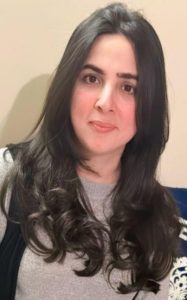
What advice would you give to other young women in Pakistan who want to follow a similar path in higher education?
My advice to young girls is nothing is impossible. If you want to get a higher education and your parents can’t afford it, don’t give up. Get something to support yourself, save some money and do it later.
What inspired you to embark on a career in international relations?
I wanted to work with an international organisation, where I can interact with different people from different cultures. I am fortunate that I got the opportunity at a very early age. I started my career as a receptionist with the U.S. Embassy Islamabad, and later got a better opportunity working in Occupational Health and Safety as an Administrative Assistant at the new U.S. Embassy Compound Project in Islamabad, Pakistan.
What is your favourite part of your job?
My favourite part of the job is virtually meeting different people from different parts of the world.
I hear you’re an avid runner. When did you start running and how has it impacted your life?
I have been into sport since 2015. I used to hike five days a week and then go cycling once a week. I started running in 2023 and it has changed my life – it helps me go to bed with a clear mind and start the day with a clear mind. The most important thing is that it has improved my mental health and I look younger.
Who are some people that inspire you?
Benazir Bhutto is my all-time inspiration. She was the first woman elected to head a democratic government in a Muslim-majority country.
What are some current goals that you are working towards?
I want to do another Masters in Occupational Health and Safety and Environment Management, as this programme will help me give back to the community. The world needs a green force, especially Pakistan.
The country is facing a number of environmental issues including air pollution, water pollution, noise pollution, climate change, pesticide misuse, soil erosion, natural disasters, and flooding. Climate change and global warming are the most alarming issues risking millions of lives across the country.
Occupational Health and Safety (OSH) is also a significant concern in Pakistan due to poor workplace safety conditions, and a lack of awareness among business and workers. The rate of accident and lost-time injuries is very high, especially in construction, manufacturing, mining and agriculture. Most significant is the lack of incident and accident reporting.
After getting this degree, I would like to work in the developing sector.
