VICTVS Global Network Member Spotlight: Wajid Mohammad

We are back with another edition of VGN Spotlight, the series where we interview some of the amazing people we work with in our VICTVS Global Network.

With thousands of members across the world, our network is filled with inspiring individuals making a difference every day, and we hope highlighting their incredible stories and achievements will inspire you.

In this interview, we hear more from VGN member Wajid Mohammad, who is our top cheater catcher here at VICTVS and is an expert in identifying suspicious behaviour.

Wajid, what made you want to work as an invigilator? 

I’m surrounded by major injustice in all aspects of my life, especially here in Iraq.  One example of this is that my academic work was equal to those who didn’t work for it.  In college, in school and previous to that, anyone who would cheat would get a similar degree as I have.  So that was frustrating for me, because I work hard on anything I do, and I was simply equal to a lot of those who cheated their way through education.  It was really annoying.  

There was an incident during college, I noticed someone in the bathroom after getting out of an exam.  It was for a big number of candidates, about a hundred, and I noticed someone relaying information to two students whose exam was ongoing (the same exam I just finished).  Both of the two people in the exam were expelled for the year.  I feel proud about that actually, but the interesting thing is, I have never found someone or talked to someone who thinks I did a good job there.  Everyone was against me on that incident.  It’s a cultural thing.  Most people just say “Try to be merciful”.  Even now, when I share my experience in these examinations working with VICTVS, everyone I know (except from maybe my mother and sister) is saying “Why not try to be merciful with them?  Why not look the other way?”  It’s unbelievable and an injustice to those who work hard.  

Do you have any idea why there is that kind of cultural response?  

Yes, I believe it’s very deeply ingrained in their upbringing because it’s a cultural thing in Iraq.  Everyone considers cheating as being smart or being clever about how to get things.  I think this is a cultural thing — it’s how they are raised.  It’s really annoying, to be honest!  And I’m surrounded by it.  That’s the way it is. 

A Middle Eastern man stands in front of the sea, wearing blue jeans, a grey shirt and sunglasses.When you’re doing exams, are you mostly doing online exams or are you doing in-centre exams as well? 

I started with in-centre paper examinations during 2019, and then after COVID I began delivering online assessments.  For the past couple of years I started with V3, and I didn’t go back to in-centre exams. 

When you’re doing virtual exams, are you mostly paired with other people in Iraq or do you monitor people from other areas as well?  

Mainly the Middle East because of the language and understanding of cultural norms.  Arabic countries like Oman, UAE, Egypt, Iraq, those are the main areas.  But I do have courses with global candidates, and I have a lot of notes about the cultural differences.  It’s quite interesting. 

You obviously have good insight into dealing with candidates from lots of different areas and I find that very interesting, because there definitely are certain regions where we find that cheating happens more often. Do you think that you have noticed more cheating attempts in remote exams compared to test centres? 

Definitely. In test centre’s, it’s all about the invigilator and if you are in control of your assessment room.  I would say that I’ve only witnessed a couple of cases of cheating in test centres.  One was a candidate taking a bathroom break and during that break, I checked and noticed someone picking up their notebooks in the bathroom.  I reported that and took pictures.  Another candidate carried their cell phone during a break and was hiding it behind their badge, below their shirt.  I caught him and he was expelled from the assessment.  

When you’re invigilating online in remote assessments, is there any type of cheating method that you see most frequently?  

Yes, use of remote software [when no lockdown browser is being used].  I haven’t witnessed other types of cheating other than I remember someone picking up some papers and a notebook [during the exam].  I was actually surprised as the gentleman was older, in their 70s.  It was really shocking to see someone that age attempt to cheat!  In that exact session, I thought “That’s cool, someone is older but continuing to get an education and improve their skills.”  But during that same session, he attempted to cheat and was stopped for doing so!  Other than that, with another candidate, I saw a paper with some numbers that weren’t there during the first check.  But aside from that it’s completely remote software. 

How do you notice that? Are there certain behaviours that make it obvious? 

I previously worked with a VR machine company.  I worked at a game centre that wanted to implement these games and I was contacting the manufacturer in China, so I had an experience with remote control software because they would log into my computer and would control that, so that was the kind of reference point.  I have a background knowledge about what remote software is doing.  

During the checks is when I notice the candidate’s behavior.  In contrast to other candidates who are not so much prepared, candidates using remote software seem very prepared.  They have the session and the correct tabs all open at the same time, perfectly correct and perfectly connected. But when you speak to them, you know they lack the technical details to do this.  That’s the first indication that something is wrong. And they prove that something is wrong when they’re glued to the mouse or other attachment.  

You mentioned that there’s obviously cultural differences to cheating as well. I’m wondering if there’s regions where people are more inclined to cheat. What has been your experience? 

Candidates that work in the Middle East, they are prone to cheating.  I don’t know exactly why or how…[but] I believe that’s the case.  

What do you think is the hardest part about being an invigilator?  

Maybe the most challenging part for me now, with remote invigilation, is that I’m not as in control as I was when I was invigilating in test centres.  Because back then, even with technical issues, I would simply take control of their computer and would fix anything I know is an easy fix.  Guiding the candidates via remote technology is very difficult, especially when you’re talking to those who lack any knowledge about technology.  

I have witnessed this only in the Middle East, but anyone who was born in the 70s, there’s a 30% chance that they would know anything about technology. In the 80s, 50/50 chance.  The millennials in the 90s, mostly they know. Gen Z, all of them know, regardless of their background. With older people in the Middle East, the technology wasn’t quite available to our parents, their generations, older generations, mostly due to different backgrounds.  They wouldn’t have had such access to technology as we started to do in the 2000s. Us millennials started to get that since childhood so it was very easy for us. 

What do you think is the best part about being an invigilator? 

It’s enjoyable because it’s the right thing to do.  It’s about ensuring people get the grades they deserve.  And actually, it’s quite amazing to be facilitating such a great experience to those good candidates.  To take an exam from home relieves a lot of the stress of actually going to an assessment room at some test centre.  This is the greatest way of using our technology. 

I like to work with people that share the same intentions, same beliefs and ideologies.  So it’s rewarding in that aspect the most, to work with you and the entire VICTVS team.  I’ve spoken to a lot of the VICTVS team, and I do feel like I’m a part of the VICTVS company.  I’m not just an outsider performing something on behalf of VICTVS — I feel like I’m a part of VICTVS.  It’s quite amazing, and I love doing it.  

The Human Advantage: Protecting Assessment Integrity in an AI-Driven World

With the advent of advanced technologies like generative AI, it’s easy to prioritise adding them into services while forgetting the value of human involvement.  Earlier this year, Ofqual emphasised the integral role of humans when they introduced new regulations regarding AI in remote assessments.  These regulations outlined that assessment providers need “appropriate human involvement and safeguards” in high-stakes assessments due to the “high bar required to ensure that all remote assessment evidence can be trusted.”  

In short, using AI on its own cannot guarantee the same integrity as using a human invigilator.   

A human-first approach is what is necessary to create trustworthy, reliable, and robust systems.  This is something we have always prioritised at VICTVS throughout our processes, and which is only made possible through our head office staff and VICTVS Global Network.  

The Cost of Relying on Technology  

As noted by Ofqual’s recent regulatory changes, relying predominantly on technology to invigilate remote exams can put a qualifications integrity at risk.  Humans are simply more reliable than AI when it comes to accurately detecting suspicious behaviour. 

Researchers at Cambridge Judge Business School state that while using AI can have a clear advantage in data-driven exercises, the technology still falls far short when it comes to complex social tasks and ethical dilemmas.  In the words of researchers Hamza, Kamal and Shaz: “AI can rapidly learn and iterate in a controlled environment, making it less ideal for coping with highly disruptive events that require human intuition and foresight.”  AI relies on “historical data rather than intuition”, meaning it can make false assumptions about an action based on previous data inputs. 

As such, AI-driven systems are also more likely to incorrectly flag neurodivergent candidates as exhibiting suspicious behaviour.  For example, more frequent eye and head movements that are commonly associated with ADHD might be identified as a sign of misconduct.  Research from earlier this year concluded that “AI can improve accessibility, but detection software produces false positives disproportionately affecting neurodivergent students.”  

When it comes to false positives, even a small percentage can have a huge impact.  The National Centre for AI notes that even a rate of 1% can still result in thousands of false positives annually when candidates are taking multiple assessments per module, resulting in a substantial administrative burden for institutions as well as damage to student trust and well-being.  Ultimately, students flagged incorrectly for misconduct may fail their exams, be banned from future assessments, and lose out on career opportunities.  The stakes are simply too high for even a 1% false positive rate not to matter. 

The Value of Human-First Invigilation at Scale 

Instead of relying solely on AI-driven remote invigilation, combining human proctoring with modern technology ensures that human ethical reasoning and judgement remains at the forefront of our exams, resulting in greater accuracy in identifying misconduct.  As stated above, it’s clear that human invigilators have a degree of emotional and contextual intelligence, as well as intuition, that an AI-moderated exam simply cannot compete with.  

On top of the ability to more accurately identify attempts at malpractice, human-invigilated exams have other major benefits.  Our VICTVS Global Network of invigilators and exam staff is based all over the world, meaning that for the vast majority of assessments, we can match exam candidates with invigilators who speak their native language and understand their local culture.  This can help put the candidate at ease and create a more comfortable and personalised exam experience which an AI service cannot compete with. 

Candidates who believe they are being monitored by an attentive invigilator are also less likely to cheat.  Researchers at the University of Zambia concluded that “knowing an invigilator was attentive made cheating too risky, thereby encouraging compliance with examination regulations.”  Therefore, an attentive person monitoring an exam is more likely to stop a candidate cheating than an invisible algorithm. 

Human Support Around the Clock 

As well as human invigilation, both candidates and invigilators benefit from human support on exam day when any issues arise.  This can include technical or WiFi issues, as well as problems with third-party software. 

While customer support is often left to AI chatbots, we combine our technical systems with 24/7, 365-day human support to ensure candidates are always able to reach a staff member who can help them.  To make this happen, we operate support services from our head office in Leeds, as well as Colombia, the Philippines, and Malaysia.  This means that there is always someone ready and available to help, no matter the time of day. 

Technically-Powered but Human-First  

As new technologies emerge, it would be a mistake to miss out on the opportunities they present.  When it can improve vigilance, data analysis, and monitoring capabilities, AI should absolutely be used in assessments.  But that doesn’t mean it should replace existing, trusted methods like human invigilation.  Not only is human invigilation a trusted and reliable mode of monitoring that leads to greater accuracy in identifying malpractice, but it can help put candidate at ease and create a better exam experience.  Supporting this human-first approach with tried and tested technology is the best way to ensure a robust, reliable service for your candidates. 

To learn more about our approach and how we can support your organisation, contact us.

VICTVS Global Network Member Spotlight: Marcelo Tadeu Ferreira

After a break, we are back with a new VGN Spotlight, the latest in our series where we interview some of the amazing people we work with in our VICTVS Global Network.

With thousands of members across the world, our network is filled with inspiring individuals making a difference every day, and we hope highlighting their incredible stories and achievements will inspire you.

In this interview, we hear more from VGN member Marcelo about his work both at VICTVS and as a firefighter in Brazil.

What made you want to work with us at VICTVS? 

 I was working as an invigilator before I started working for VICTVS. I was working for an awarding organisation in my city because there is an assessment centre there, but after some time they informed me that they were outsourcing the invigilator service and were not going to continue with their invigilators, so I started looking and found a similar job position in my city with VICTVS. I was impressed that the company was founded on specific values and it was expanding globally, so I was very excited to apply. Then I got the job and started working with VICTVS in 2017. 

Having worked with us now for almost ten years, what are some of the biggest changes that you have seen in exams over this time? 

Changing from paper-based exams to online exams, I think it changed almost everything! When I started working with VICTVS, we were using paper to conduct the exams. We then evolved to online sessions using computer-based exams in-centre. In 2021, it turned into remote exams, so we could use the computer in any place in the world to deliver the exams.  

For me as an invigilator, it was a big change that happened in delivering assessments. It changed the technology used a lot, but I think it improved the process so much. Because originally, we would receive a package of papers to the address 48 hours before the date of the exam, and when the candidates finished the exam, the papers would then need to be marked and the results given to the candidates. I think with the online and remote sessions, it improved the process and now we don’t lose as much time as before. 

With that switch over to doing mostly digital exams, have you seen cheating methods change?  

Yes, the cheating methods depend on the technology that you are using to deliver the exams. When I was conducting paper exams, I think the most common type of cheating was the candidate trying to look over at the next candidate’s exam paper or ask them something, and I also saw a candidate trying to get a note from his pocket. I saw this type of cheating. Remote exams are very different. For example, recently I could see a candidate in a remote exam talking to another person inside of their room, a hidden person that I couldn’t see but I could hear, so I reported it to VICTVS.  

With remote exams, some candidates try to use the other software in a computer to give information to another person outside of the room, but VICTVS use multimode monitoring and locked down exam browsers so it’s very, very difficult for the candidates to cheat. I think nowadays, security is very high with remote exams. 

Could you please tell me more about your work as a firefighter? What made you want to go into that role?

In 2019, I started my work as a firefighter. I wanted to do work that could positively impact society, and I think being a firefighter is very good for that as I can help other people. I was inspired by my father. He is no longer alive, but he was a doctor and he loved to help other people. I was inspired by him. I think it is very good to have it in my routine as it’s wonderful to help other people.  

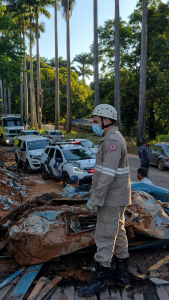
 A firefighter in protective clothing stands in wreckage looking out at cars and a street lined with trees.What does your day-to-day work look like as a firefighter, because it can’t just be putting out of fires all the time, right?! 
We attend emergency situations in the city, like fire in buildings and in houses, but we also help with other situations like vehicle collisions and people trapped in difficult to access places. We carry out high altitude rescues and animal rescues too — a dog in a difficult situation, or a cat in a tree! Disasters too, like a building collapsing. I also attend first AID situations, such as a person choking on a piece of food. People will come to our headquarters and we have to help them. There are simple situations that we deal with as well as more complex situations.  

It sounds like a nice variety of work that you do. Do you think there’s any similarities between your work as a firefighter and working for us here at VICTVS?   

Yes, I think the similarity between the VICTVS role and the firefighter role… I think both roles share a strong ethical sense of noble values, and we as firefighters have these noble values, like courage. A firefighter has to have a lot of courage to help people, and working with VICTVS, sometimes we have hard situations too! For example, when we’re invigilating, if we verify that someone is cheating, we must alert this person and report them, so we need to have courage to go ahead with that.

What do you think has been your biggest challenge as an invigilator working with VICTVS? 

A big challenge I think was, there was a situation that I informed VICTVS about where I was suspicious of cheating. When there’s a more complex situation, you should take action and sometimes you have to be quick and inform the candidate that he shouldn’t be cheating or looking for other software on his laptop, for example. In this situation, I had to go to VICTVS support and inform them of what was happening.  

We have to be quick acting in these moments. I think it can be a difficult situation in our services as invigilators when something seems to be out of our control, and we should act to stop cheating. If we don’t do that in time, we are going to make a mistake, so you have to be quick and act correctly in that moment.  

What do you think is your biggest challenge in your work as a firefighter?  

As a firefighter, I want to go to the situation and save the life of the person. When I arrive there and the person is no longer alive, it impacts our psychological and mental health. It’s not so good for us. So, I think the most challenging situation is when the person is not alive, and after that we have to continue on with our life.  

Do you have a good team of people around you that can support with that? 

Yes, I have a very good team. I’m happy with our team and we help each other, even in more complex situations. I think it’s a wonderful position and I’m very happy with the other firefighters too. And, because my schedule there is 48 hours a week, I can simultaneously work with VICTVS too. 

You obviously do a lot of very moral work and that must be quite emotionally draining at times. Is there anything that you like to do to relax or have fun? 

Yes, I like to travel when I have the time! I travel to other cities and to the beach. I like to know different places, and it’s good for me to sit in a car and go on the highway. I can forget life for a moment!   

What do you think is your favourite part of working for us at VICTVS?

There are so many parts of working at VICTVS that I love, but I think the way the company treats their collaborators is very good. I see VICTVS as a family because I know a lot of people there. Even when I am in a situation where I should improve, VICTVS make me feel comfortable and I am able to learn from it. 

What is your favourite part of being a firefighter?  

The best part is the opportunity to be in a situation where I can help other people, because we have been trained for it and we have the correct equipment to save the life of a person. For example, if a person is stuck in a vehicle after a collision, only the equipment that the firefighters have can cut the iron and the metal off the car and take the person out from the situation. So, in general, I think we have the opportunity to save a person’s life — when other people could only run from a fire or an emergency, we can arrive and help them. 

Raising the Standard: The VICTVS Conference 2026

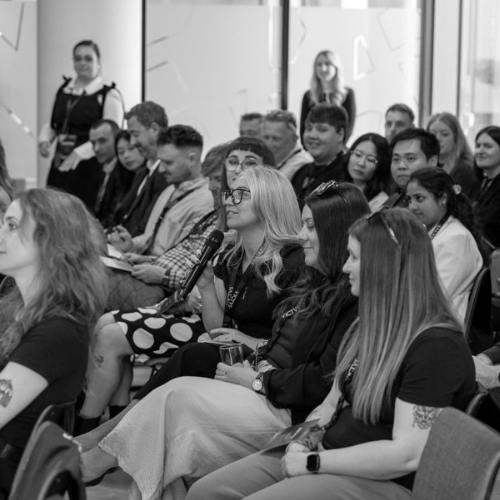
VICTVS Con crowd shot in black and white, square

On July 1st, we hosted our annual conference at the stunning Terrace venue in Leeds.  This year’s theme, ‘Raising the Standard: Accountability in Assessment’, tackled a critical yet often-neglected topic: accountability.  While accountability may not always take centre stage, it is the backbone of integrity, trust, and value in qualifications. 

Accountability is the obligation that individuals or organisations have to take responsibility for their actions and accept ownership of any outcome, whether good or bad.  In assessment, this can look like awarding organisations and assessment providers understanding how much their procedures can impact an assessment on a granular level, and taking responsibility when things go wrong.  Without accountability, the entire assessment system would risk losing its value.  

To explore accountability and its implications, as well as wider issues impacting academic integrity and assessment, VICTVS hosted a diverse lineup of speakers: 

  • Niamh Pierce, Head of Research at VICTVS’ research division, the Assessment Security Research Group (ASRG)
  • Joanna Taylor, Head of Operations at International Well Control Forum (IWCF) 
  • Liz Sewell, Head of Operations at VICTVS 
  • Shaun Roberston, Director of Qualifications and Credentials at the Institute of Chartered Accounts in England and Wales (ICAEW) 
  • Victoria Morgan, Head of Assessment at City & Guilds 

The day kicked off with an eye-opening presentation by ASRG’s Niamh Pierce on her latest research paper, ‘Candidates for Hire’, which exposed the impersonation methods some candidates use to cheat, including professional impersonation services.  These services start at £20,000, highlighting the scale of the problem and how these services are often only accessible to those with money to burn.  The talk sparked many questions from the audience on ID checks, and how awarding organisations can best arm themselves against this type of malpractice.  For those wanting to read more, Niamh’s paper is available on the ASRG website. 

Niamh PIerce from ASRG stands in front of a lecturn and presentation screen, about to go through her research on Candidates for Hire.

Joanna Taylor from IWCF then took to the stage with a sobering reminder that accountability in assessment isn’t just an abstract concept; it can have serious consequences.  For those working in the oil and gas industry, an individual working on a rig without the proper knowledge is not only dangerous to those around them, but also the environment.  Joanna’s session considered the importance of holding those caught cheating to account, as well as what constitutes an appropriate punishment.  For example, how long should they be banned from taking exams in the industry?  And should they face extra pressures and precautions from awarding bodies in the future?  These were two of the questions prompted by Joanna’s talk which fueled conversations long into the lunch break.

Beyond the Talks 

As well as hearing from our guest speakers, refreshments were provided throughout the day, including fresh ‘Brain Juice’ to help stimulate discussions.  But the real highlight was the in-house entertainment in the form of VICTVS’ Beat the Cheat video game.  

This retro-style video game challenged players to navigate a stressed teacher through an exam hall, catching cheating students in the act.  The prize?  A Kindle for the highest scorer.  Inevitably, this led to some friendly competition, all while reinforcing the day’s themes.

People look up at a screen, backs to camera, playing a game called Beat the Cheat

Closing Sessions 

After a sunny, roof-top lunch, we reconvened for the day’s final sessions. 

First, we celebrated the VICTVS Global Network — our vital community of exam centre staff, invigilators, and quality assessors.  Their work is integral to VICTVS and it was great to hear from members all over the world via video about their work with us.  

We then heard from VICTVS’s Liz Sewell on the operational logistics of running exams in extreme conditions like harsh weather, political upheaval, or internet blackouts.  This insightful talk was followed by a particularly thought-provoking session held by ICAEW’s Shaun Robertson.  

Shaun’s talk considered the role of assessment design in preventing cheating.  He challenged whether some exams should accurately reflect the conditions that candidates will be facing in the real world.  For example, shouldn’t medical students be allowed to use emails during exams if that’s what they’ll be expected to do in the workplace?  Shaun also argued for the importance of designing a course that accurately reflects the exam content.  If it doesn’t do this, how can candidates be expected to succeed?  His talk was a call to action for awarding organisations to take accountability for the systems and cheating opportunities they help create. 

We closed the day with an illuminating session by City & Guilds, who covered the logistical practicalities of scaling assessments to support thousands of courses worldwide.  For smaller awarding organisations, this talk was an insightful look into the efficiency, creativity, and organisational skills needed to be successful at scale.

The crowd at the VICTVS Conference 2026 in black and white

Final Reflections 

After a day of engaging talks and discussions, the VICTVS Conference came to a close with an early evening drinks reception.  It was a great way to round off the day — and, for football fans, a chance to catch the World Cup game in good company.  

With contributions from VICTVS, ASRG, IWCF, ICAEW and City & Guilds, the second VICTVS Conference highlighted both the complexity and importance of upholding accountability and integrity in assessment.  More importantly, it reinforced the value of bringing professionals together to share challenges, solutions, and new perspectives.  It is only by doing this that we can hope to find solutions to the problems discussed here. 

As the assessment sector continues to evolve, the conversations started at this event will undoubtedly continue.  We look forward to seeing how these discussions shape future practices and assessment design, and to welcoming attendees back for another day of learning, collaboration, and innovation next year. 

To stay up to date with our work and any future events, follow us on LinkedIn and subscribe to our monthly newsletter.

The Best of Both Worlds: A Hybrid Exam Solution

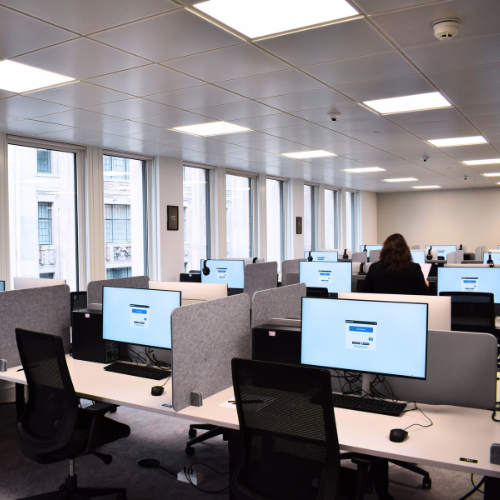
Photograph of test centre room filled with desks, a monitor on each desk.

Debates about exam format continue to be at the forefront of conversations surrounding assessment security, with remote assessments often under fire for introducing new vulnerabilities.  While these conversations usually present an “either/or” conclusion, suggesting one model is better than the other, there is another answer: a hybrid exam solution — one which proactively protects against risks across both formats whilst offering candidates an inclusive and truly global assessment approach.  

So, why choose a hybrid assessment solution?  To answer this question, let’s take a look at the realities of traditional test centre exams and remote solutions, as well as their risks and limitations.  

Test Centre Exams 

Test centre exams are generally seen as one of the most trustworthy assessment formats.  They have a longstanding legacy and require candidates to take their exam in a pre-determined location, usually with invigilators and strict exam conditions.  This format is known, understood and straight forward, with the environment under control of exam centre staff and invigilators.  This helps ensure consistency within each exam and across exam centres. 

While test centre exams have been taking place for many years and are generally considered the legacy format, they have their limitations.  If an assessment is in-person only, it naturally reduces the number of candidates who can take the exam due to geographical and monetary restrictions, as only those who live near a test centre or who can afford to travel to one can take the exam.  In-person exams can also be less suitable for those candidates with disabilities or neurological disorders such as autism, who may find the environment of an exam hall inaccessible or overwhelming.  Though many assessment providers do their best to provide one-on-one rooms and meet the accessibility requests of every candidate, the rise of SEND requests means this is becoming harder to do because of staff costs and limited venue infrastructure. 

Crucially, despite being a longstanding fixture of assessment, test centre exams are not impervious to cheating.  Wearable devices, impersonation, and more traditional methods of cheating, such as sneaking in notes, still occur in test centre exams.  Awarding organisations must rely on venue security, as well as the diligence and integrity of invigilators, to catch anyone attempting malpractice.  

Remote Exams 

Introduced at scale during the COVID-19 pandemic, remote exams (much like remote work) have remained an option for many forms of assessment.  They are often met with distrust, as candidates taking their exams remotely are not in a controlled space and the quality of remote technologies can differ drastically.  But this exam format undoubtedly has its positives.  

Unlike test centre exams, remote exams enable candidates to take their assessment from anywhere in the world as long as they have WiFi and a suitable device.  This exam type can therefore be seen as democratising qualifications, and a way of opening doors to those who would otherwise be unable to take assessments integral to their dream profession. 

Remote exams can also be more accessible for candidates with disabilities or neurological disorders, as they can take the assessment in a chosen, comfortable environment. 

But it’s the environment which is a cause for concern amongst many working in assessment.  Some awarding organisations, such as the ACCA, have stopped their remote exam option as they believe there are more possibilities to cheat when candidates are taking their exam from home.  However, many remote invigilation and exam solutions, such as our own at VICTVS, utilise multi-mode monitoring, 360-degree room tours, and expert invigilation to maintain the same high degree of security in remote exams that is present in test centres.

Why Choose a Hybrid Solution? 

Whilst both types of exam format have their positives, they are not without their downsides.  And for those candidates determined to cheat, the format of their exam is unlikely to put them off — it will simply determine the way they try and do it.  

By combining test centre and remote exams, awarding organisations can offer the best of both worlds, providing a more flexible exam solution at a truly global scale.  In-person exams can continue for those within reach of a test centre, whilst those further afield can take the exam remotely.  Disabled candidates, or those with specific requirements, can also take the exam remotely if it better suits their needs.  

Of course, there are necessary steps to be taken to safeguard assessment integrity across both assessment formats.  Exams need to be monitored by vigilant proctors who are well-trained in the latest cheating techniques and technologies, such as wearables and AI-powered devices.  They also need to know what to look for when monitoring candidates, as well as the body language associated with these emerging threats, both when invigilating in-person and online. 

Assessment and invigilation software must be protected with robust technical security to stop digital intruders or hacks from taking place.  This goes for test centre exams as well as remote, given that many assessments now take place on a laptop as standard procedure.  

Ultimately, cheating will always exist, no matter the format.  Awarding bodies must simply mitigate these risks by using stringent security protocols, professional invigilation services, and the latest in remote invigilation technology.  

It is up to awarding organisations to decide who can take their exams remotely, but it is only by supporting both forms of exam delivery that they can cater to a wide variety of candidates’ needs, wherever they are based.  

To find out more about our remote and in-centre exam solutions, contact us here.  

The VICTVS Podcast: Episode 12 – Finding the Balance: AI in Higher Education

[vc_row][vc_column][vc_column_text] In our latest edition of The VICTVS Podcast, our hosts Xanthe Mitten and Kat Barnett welcome guest Richard de Blacquière-Clarkson to the studio to discuss AI in higher education. 

Richard de Blacquière-Clarkson is the AI Hub Lead at the University of Leeds and Strategic Lead for Research Ethics at the Leeds Institute for Teaching Excellence (LITE).  Through his work, he fosters discussion between academics around the use of AI, particularly focusing on how to prepare students for an AI-powered workplace whilst simultaneously preserving academic integrity. 

While we have previously considered a more positive slant on AI with AI advisor and TheWhiteBox author Nacho de Gregorio Noblejas (see episode 11), this episode specifically focuses on the realities of AI in higher education and the difficulties academics have in ensuring students only use the technology in a way that benefits their learning.  Throughout the discussion, we cover these practicalities, as well as the issue of deskilling and the possibilities of sovereign AI.  

You can watch the episode on YouTube via the link below, or listen on Spotify or Apple Podcasts.  You can also view the full transcript here.  Make sure to subscribe to stay updated with the latest news in the education sector, and keep up to date with Richard’s work by connecting with him on LinkedIn: Richard de Blacquiere-Clarkson | LinkedIn 


About The VICTVS Podcast

Learning goes beyond exams and qualifications – it’s about expanding horizons, overcoming challenges, and building skills and knowledge.  At VICTVS, we invite guests from a variety of industries and cultures to share their insights, offering lessons from their diverse experiences. If you’re passionate about education and how learning can help you achieve your goals, the VICTVS podcast is for you.

Enjoy our content?  Subscribe, rate, and share The VICTVS Podcast on Apple Podcasts, Spotify, and YouTube. [/vc_column_text][/vc_column][/vc_row]

Education Under Fire: The Importance of Delivering Exams in Conflict Zones

War torn Egypt, aerial shot

In areas experiencing conflict, you would be forgiven for assuming that assessments no longer take place.  Yet, many individuals living through these circumstances still want to take their exams and become qualified.  They are determined not to let years of hard work go to waste, knowing that delays in qualifying could impact their future careers and opportunities for stability. 

At VICTVS, we are committed to supporting these aspirations by delivering exams internationally, including in conflict zones such as Ukraine, Palestine, and parts of the Middle East. 

But organising assessments in these areas requires careful planning and vigilance, especially around safety and security. So, how do we navigate these complex challenges and make sure exams can still take place? 

Safety and security 

Safety and security concerns are the biggest thing we need to consider at VICTVS when carrying out exams in areas experiencing war or conflict.  This includes not only the safety of the exam candidates themselves, but the safety of our VICTVS Global Network members who are working in test centres and invigilate the exams.  We need to know that these individuals can work safely without putting themselves in danger.  

To do this, when we hear about any form of conflict in regions where we host exams and where our invigilators are based, we immediately reach out to our teams to make sure they are safe.  If test centre exams are scheduled, we discuss whether our staff are still comfortable or able to travel to the exam centre.  If not, we are often able to switch them to invigilating remote sessions using our V3 platform so that they can still do their job. This is important, as many of our invigilators rely on income from invigilating — especially in conflict regions where other work may be hard to come by.             

For remote exams, if any of our scheduled invigilators are based in a region deemed unsafe, they can travel to a safe zone and invigilate from there if they are comfortable to do so.  This is important as it allows them to continue their work and make an income during this time.  If an invigilator is unable to work, we can switch them with another invigilator, ensuring that the candidate can still take their exam.  

We can also add additional security measures to exams if the awarding organisation decides they are necessary.  This can include introducing multiple ID checks on exam centre staff and invigilators entering a test centre.  We have seen this before, where only invigilators from a specific region are allowed to enter an exam centre during wartime; while this can be frustrating for those who do not meet the requirements, it is an understandable precaution when working in volatile regions where the risk of attack by foreign parties is high.  

Importantly, if a region is deemed too unsafe, the awarding body will reschedule exams so that candidates and invigilators are not put at risk. When exams do go ahead, we regularly check in with our teams to make sure they are safe and happy to continue doing their jobs.  

Infrastructural and connection concerns  

Internet connectivity and power outages are a common symptom of conflict, whether it be from the physical bombing of critical infrastructure or from governments deliberately restricting internet access.  

During remote exams, if our invigilators or exam candidates experience any technical issues, we go through troubleshooting with them to make sure that the issue is outside of their control.  Once this has been established, we can replace invigilators whose connection cannot be restored so that the candidate they have been paired with can go ahead and take their exam. 

In the case of candidates whose connectivity has been impacted by conflict or government restrictions, their exams are rescheduled.  

When it comes to test centres losing power during a conflict, we do everything we can to ensure that exams can still go ahead.  In the past, this has included hooking up exam centres to alternative power sources, such as nearby buildings — a collaborative effort between both VICTVS HQ staff and exam centre staff working on the ground.  

Once connectivity has been confirmed and no other technical issues have been found, the exam can go ahead as normal.  Invigilators and test centre staff must follow regulations, monitor candidates closely, and report suspected malpractice, just like they would in any other exam.  Candidates are expected to follow the rules and take their assessment fairly, and our test centre staff and invigilators are there to make sure they do. 

The strength of the VICTVS Global Network 

The size and strength of our VICTVS Global Network gives us incredible insight into what is going on in almost every corner of the globe.  Our direct, on the ground connections mean that we can receive real-time updates on conflicts, war, and other political disruption worldwide.  This enables us to gain valuable insights into what is happening in any given place at any given time — insights that are often more reliable than global news coverage. 

Because we have over 5,000 VICTVS Global Network members across the globe, we are able to support candidates in 180+ countries, from highly populated cities to more remote regions.  This means that if an invigilator cannot work a remote exam because of an ongoing conflict, we are easily able to replace them with another invigilator so that they can still take their exam safely and securely.  Similarly, with test centre exams, if an invigilator is unable to attend, our vast network can usually replace them, either with someone local or someone who is happy to travel to the venue. 

By going the extra mile and travelling to test centres far from home, or by helping fix connectivity or power issues at a test centre, our VICTVS Global Network help ensure that exams can happen in even the most unlikely circumstances.  Their dedication really shines during these moments.  

Why is it so important to make sure these exams go ahead? 

While it might not seem like a big deal, candidates living in areas experiencing war or conflict still want to take their exams and get qualified.  Completing an assessment, getting qualified, and meeting a career or educational milestone is perhaps even more significant to those deeply impacted by war who are in need of hope for their future.  We are still hosting exams in Ukraine and Ramallah in the West Bank, and these are key examples of how even those living in the most turbulent and war-torn regions still want to get their qualifications.  

Exams are also important to our invigilators.  Many individuals living in conflict zones are no longer able to do the job they did before the war, and invigilation can provide a valuable income. This is the case for many members of our VICTVS Global Network, such as one professor in Ukraine who now invigilates for VICTVS to support his family. 

Ultimately, it is important that we continue to deliver exams whenever possible, so that those living in tough circumstances still have the opportunity to get qualified and look forward to their future careers.  This optimism and hope is something everyone deserves — especially those facing adversity daily. 

The VICTVS Podcast: Revision Notes – March Industry News

[vc_row][vc_column][vc_column_text] Our hosts Xanthe Mitten and Katherine Barnett are back for another edition of Revision Notes, the series where we give you the latest news in assessments, education, and the ed-tech space.

In this episode, we cover some of the most interesting stories we’ve read in March, including a teacher whispering prompts to students, the criminal exam cheating syndicates preying on Chinese students in Australia, and a sommelier scandal which shocked the wine world.

You can watch the episode on YouTube via the link below, or listen on Spotify or Apple Podcasts.  You can also view the full transcript here.  Make sure to subscribe to stay updated with the latest news in the education sector.


Sources:

About The VICTVS Podcast

Learning goes beyond exams and qualifications – it’s about expanding horizons, overcoming challenges, and building skills and knowledge.  At VICTVS, we invite guests from a variety of industries and cultures to share their insights, offering lessons from their diverse experiences. If you’re passionate about education and how learning can help you achieve your goals, the VICTVS podcast is for you.

Enjoy our content?  Subscribe, rate, and share The VICTVS Podcast on Apple Podcasts, Spotify, and YouTube. [/vc_column_text][/vc_column][/vc_row]

The Future of Global Assessment Starts with Smarter Booking

A golden compass on a red map

Booking and scheduling exams can be a logistical headache, especially when awarding organisations are managing candidates, invigilators, and exam centres across multiple continents.  What seems like a simple admin task can quickly become more complex when scaled globally.  

Traditionally, booking an exam meant phoning or emailing a local test centre or awarding body and selecting from whatever times were available.  These systems were unspecialised and relied on manual data input, leaving them open to human error.  Now, candidates expect booking and scheduling to be an easy, online process — especially since many exams have also been digitised.  Candidates want the same level of convenience and digital access they experience in everyday life when it comes to their education and becoming qualified.  

This means the traditional exam booking and scheduling model doesn’t hold up.  

Awarding bodies now face challenges such as: 

  • Booking exams over different time zones
  • Managing rescheduling requests 
  • Matching candidates with invigilators 
  • Handling cancellations and refunds 
  • Processing payments across different currencies 
  • Coordinating remote and in‑centre exam options 

A streamlined booking and scheduling system within a single platform reduces the workload of AOs or institutions and prevents processes from becoming unnecessarily complicated.  This is especially valuable when managing exams across different countries, languages, and time zones. 

Globalisation 

Globalisation has fundamentally reshaped our daily lives.  The world is more interconnected than ever: digitally, economically, and culturally.  We can collaborate in real time across different countries and time zones, experience media from every corner of the globe via our phone, and buy and sell our services internationally.  Education is now a part of this global exchange — qualifications can be delivered almost anywhere, and candidates expect to be able to sit exams wherever they are based. 

This increase in global access brings huge benefits: 

  • Broader reach for awarding organisations 
  • Greater flexibility for learners 
  • Opportunities to expand into new markets 
  • Improved cultural understanding and shared standards 

However, these positives come with new logistical considerations. 

Global availability means working across multiple time zones, ensuring candidates are matched with invigilators who speak the same language, and making sure that exam conditions are consistent no matter the location.  Even small issues—like daylight savings changes, local holidays, or differences in payment methods—can significantly impact booking and scheduling exams internationally.

On top of this, candidates today expect seamless digital experiences.  When it’s so easy to book travel, medical appointments, or online shopping deliveries instantly, candidates expect the same from their exam experience.  Anything less can feel outdated and frustrating. 

Without the right tools, the administrative burden of delivering exams globally can grow rapidly, placing unnecessary strain on awarding bodies and reducing the quality of service delivered to candidates.  This is where institutions can benefit from the use of a unified booking and scheduling platform, optimised to work across different time zones.   

Booking and scheduling global exams with VICTVS ONE 

Our unified assessment platform, VICTVS ONE, simplifies global exam booking and scheduling procedures for awarding bodies.  The direct-to-candidate platform allows individuals to book and pay for their exams from anywhere in the world.  Once a candidate has selected an exam and their preferred time and location (digital or physical), the platform automatically manages scheduling, removing this logistical burden from institutions.  Crucially, because exam capacities are automatically managed by the platform, only ‘available’ exam slots are available to be booked, preventing overbooking. 

Complexities that are normally difficult to manage manually — such as time zone conversion — are handled automatically by VICTVS ONE, removing the risk of human error and ensuring that every candidate’s exam start time is displayed correctly in their local time zone.  The platform also offers multiple languages and is customisable, meaning institutions can cater to specific regions.  

In addition to converting time zones, the platform also converts exam fees into the candidate’s local currency using that day’s exchange rate.  This eliminates candidate confusion around international pricing and makes the service more user-friendly and globally accessible.  

Our software facilitates both in-centre and remote bookings.  If a candidate books a remote exam, the system automatically creates a corresponding remote invigilation session within VICTVS ONE.  Rescheduling or cancelling is equally straightforward: candidates can submit change or cancellation requests directly through the platform and track the progress of these requests in real time. 

Awarding organisations can also access information on every booking for a particular exam, monitor pending payments, and review any changes or requests that are awaiting approval. This means that even though the booking process is automated, awarding bodies still have complete transparency over each exam.  

By centralising and automating the booking and scheduling process, VICTVS ONE removes significant administrative pressure for awarding bodies and helps ensure accuracy and consistency across assessments.  For candidates, it provides a smooth, stress‑free experience where they maintain full control over when and how they take their exam, as well as clear, localised information on timing and currency.  

For institutions wanting to reach potential candidates in different countries and regions outside of their own local territories, using an automated booking system can remove logistical headaches whilst remaining accessible for candidates.  

Conclusion 

It is normal for candidates to expect accessible education and qualifications around the world but for institutions, manually booking and scheduling exams on a global scale can be a major practical undertaking.  By using a platform that enables automatic booking, like VICTVS ONE, awarding bodies can ensure their candidates get to take their exams (remotely or in person) without the risk of manual errors, or the heavy administrative workload that comes with coordinating global assessments.

Today’s candidates expect global learning experiences to be as seamless as the rest of their digital lives.  Automating exam booking and scheduling can help institutions meet these expectations, and ensures that global qualifications remain accessible, accurate, and equitable for every candidate, no matter where they are based.