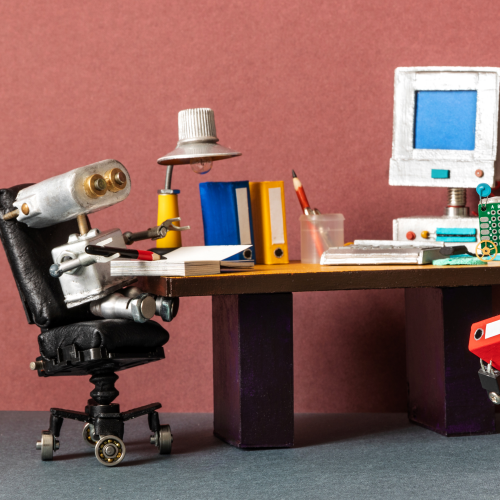
Why User Experience Matters to Your Candidates

Exams are already a stressful experience, so it’s important that steps are taken to make scheduling, payment, booking, and the exam experience itself as stress free as possible.  That means using reliable, user-first processes and systems that candidates, awarding bodies, and invigilators can all navigate easily. 

There are different steps to go through for in-person and remote exams, but remote exams come with added pressures – from technical issues and WiFi problems, to the unfamiliarity of being invigilated online.  It’s important that these variables, as well as the overall user journey, are handled with just as much care as the assessment itself, to make sure candidates have as stress-free an experience as possible.

What do we mean by good user experience in exams? 

A good user experience in an exam is one which brings no extra stress to the candidate, allowing them to focus on simply showing their intelligence rather than battling with unclear booking, scheduling, or exam systems.   

Whether in-person or remote, every candidate must book and schedule their exam in advance.  This process often involves an automated system or exam staff assigning dates, times, and locations.  This can be confusing and stressful unless candidates are presented with a straightforward process and clear communication.  Awarding organisations and exam providers needs to be clear – especially when rescheduling exams or dealing with last-minute changes.   

When it comes to taking an exam, a number of different factors need to come together to make the experience a good one for candidates.  For in-person assessments, the exam centre can make a huge difference – rooms should be a comfortable temperature, with adequate lighting, comfortable seating and good candidate facilities.  Accessibility requirements must also be met for those candidates who need them, and invigilators should be good at communicating rules and creating a calm environment.

With remote exams, there’s some different factors to consider.  Candidates will be in an environment they have chosen, but will be relying on technology for the assessment itself, as well as for invigilation and submitting the exam. This greater reliance on technology means that the software and systems required to be used by the candidate need to be clearly designed and easy to understand.  This includes the assessment system itself, the invigilation platform, and any other browser or phone applications that need to be used at the time. 

While any exam taken on a computer is reliant on a strong WiFi connection, this is especially the case for remote exams, as the candidate is responsible for their own connection.  This part of the user’s experience is outside of an awarding body or exam providers control and relies on the candidate testing their connection and ensuring it is stable before exam day.  

The impact of poor user experience 

A good user experience often goes unnoticed because it’s so smooth, but a poor one can dominate the entire process, leading to confusion and frustration.  Not knowing when your exam is going to be, having problems with rescheduling, or being unable to use an assessment platform in the way that’s expected, are all possible outcomes of a badly designed process.  It can derail a candidate’s confidence and stop them from performing at their best. 

In comparison, a good user experience can reduce administrative errors, confusion, and boost candidate’s confidence in the exam process.  Importantly, making the exam booking and assessment itself as streamlined as possible reduces stress and allows candidates to focus on the exam itself. 

How VICTVS ONE supports a seamless candidate experience  

Our unified assessment platform, VICTVS ONE, brings together every stage of the exam process in one place, creating a smooth experience for candidates – as well as awarding organisations and invigilators.  By integrating booking, scheduling, invigilation, and assessment delivery into a single platform, we have removed unnecessary complexity so that the exam process runs efficiently from beginning to end. 

All exam bookings – including scheduling, candidate registration, and payments – are managed through the platform.  The system automatically synchronises with exam centre availability, allowing efficient coordination of both in-person and remote assessments.  Its straightforward interface also enables administrators to make manual adjustments where needed, offering flexibility to accommodate individual candidate requirements. 

A good user experience is essential for a truly successful exam  

When candidates can move through each stage of the exam process smoothly, they’re more capable of performing at their best.  A well-designed user experience doesn’t just reduce stress; it also strengthens trust in the assessment itself and helps maintain academic integrity.  By prioritising usability and clarity in their procedures, awarding bodies and exam providers can ensure that candidates get the best chance to succeed. 

If you want to find out more about how VICTVS ONE can provide a good experience for both your team and your exam candidates, get in touch with us here.  

All Is Not What It Seems.  When Artificial Intelligence gets confused.

The VICTVS office set in the 1950s. As imagined by an AI.

[vc_row][vc_column][vc_column_text css=”%7B%22default%22%3A%7B%22margin-bottom%22%3A%2220px%22%2C%22padding-bottom%22%3A%2220px%22%7D%7D”]Recently a member of the VICTVS DevOps (software development) team, asked an AI-powered image generator to create a picture showing what the VICTVS office would have looked like in the 1950s.  The result is below.

The VICTVS office set in the 1950s. As imagined by an AI.At first glance, this is a really excellent image that has the effect of making one immediately ask ‘how the hell did it do that?’.  The colours and style are period appropriate, the ubiquitous suits in the office, the lack of diversity, even the lamps on the desk are what you would expect to see.  On the surface, this seems like a miracle.  Humans have evolved to the point that we have created machines that can generate art in mere seconds, that would take a person significantly longer.  The effort required to imagine a prompt such as, ‘make me an image representing…’, is clearly a tiny fraction of that required to actually sit down and make that image from scratch.  But the machines make it look so easy.

That is until you look closer.

A 1950s smartphone?


A 1950s WAN / server?


A 1950s laptop?


No idea what’s happening here…


At VICTVS we like to make sure that we are as close to the cutting edge as we can, but had we existed in the 1950s, it’s hard to think that we would have managed to be 40 years ahead of the tech game…

Understanding why these and other errors occur in generative AI systems is of course not simple.  The volume of data being accessed (i.e. the whole of the Internet), and the lack of quality control of that data (it doesn’t take long to find total nonsense in cyberspace), means that anyone tasked with providing an answer to a question using this data, may well end up quoting or referencing or incorporating erroneous source material.  This seems to be what AI is doing – making assumptions, joining dots and filling in the blanks with best guesses.  The irony of course is that this is a very human thing to do – but it’s the sort of thing that we expect of small children.  And this is an interesting point referred to by Mo Gawdat in his book Scary Smart.  Here he explains that current AI systems should be regarded as children who are finding their way through an incomprehensibly complex world and at the same time, are being asked endless questions by carbon-based life forms who like to laugh when the systems get it wrong.  As the machines continue to create answers, images, results and assessments, they will need to be corrected when they make mistakes – just like a child – so that they may continue to improve.

The point of this article is not to condemn the current AI systems, but to highlight that it is important to recognise that the current generation of algorithms are in their infancy.  Their training has barely begun.  To imagine them as fully formed automata capable of exceeding human capabilities in all aspects, is a mistake.  The companies behind these systems are of course keen to extoll their virtues through slick marketing, suggesting that their latest ‘AI’ bot can act as your digital assistant (like Clippy…) to sort out your bad habits, bad admin, inefficiencies, lack of ideas, lack of creativity, and lack of time, but just because someone says that something can do something, does not mean that it actually can.  Therefore, it is important to be realistic in our expectations of current AI technology, to acknowledge and learn about its limitations, and to ensure that if we choose to use AI in assessment design or execution, then those assessments are not compromised as a result.

The age of AI is here.  Whether that is a good thing for humanity or not, will be shown in the course of time.  For now, we should all try to maintain sensible levels of expectation for this brand-new technology and ensure that we don’t fall for marketing hyperbole or be dragged in by the allure of the ‘shiny new thing’ syndrome.  Current AI is good, but it is not a panacea.

For clarity, this article was NOT written using Chat GPT or any other LLM.  All errors are my own.[/vc_column_text][us_separator size=”custom” height=”30px”][us_post_author link=”%7B%22type%22%3A%22author_page%22%7D” avatar=”1″][us_separator size=”small”][vc_column_text css=”%7B%22default%22%3A%7B%22font-size%22%3A%2220px%22%7D%7D”]    Share this article[/vc_column_text][us_sharing providers=”email,facebook,twitter,linkedin,vk,whatsapp” counters=”hide”][/vc_column][/vc_row]

Artificial Intelligence as Prediction Machines. How AI may Enhance Performance in Assessments and Exams.

Artificial Intelligence (AI) has existed in many forms for decades and has transformed many aspects of our lives, including education.

In this article, we explore how AI’s prediction function can revolutionise a student’s learning experience and significantly improve their performance in assessments and exams.

Understanding AI as Prediction Machines

AI algorithms employ complex statistical models and machine learning techniques, to process vast amounts of data and then generate predictions.  These prediction machines utilise historical data, patterns, and trends to forecast future outcomes.  By continuously learning and adapting the algorithm based on new information, they become increasingly accurate over time.  In the context of education, AI prediction machines can analyse various factors such as a student’s performance history, study habits, and other contextual data, to generate insights and predictions that may enhance the learning journey.

Personalised Feedback

One of the principal benefits of AI-driven prediction machines in education is the ability to provide personalised, unbiased feedback.  By analysing individual performance and comparing it to an extensive database of historical data, AI algorithms can offer precise feedback tailored to each learner’s strengths and weaknesses.  Whether this is identifying areas for improvement or recognising areas of expertise, personalised feedback helps learners understand their progress, focus on specific skills, and adjust their study strategies accordingly.

Tailored Study Plans

AI prediction machines can create personalised study plans that adapt to an individual learner’s needs.  By considering likely areas of difficulty or potential knowledge gaps, AI algorithms can recommend specific learning resources, exercises, or study materials to help students strengthen their weak areas.  These tailored study plans save time and energy by directing learners to the most relevant and effective resources, again helping to optimise their learning potential.

Real-Time Assessment and Monitoring

With the assistance of AI prediction machines, assessments and exams can become more efficient and accurate.  Traditional assessments often rely on subjective grading, which may be prone to bias or inconsistency.  AI algorithms can analyse responses and compare them against a vast database of correct and incorrect answers, ensuring standardised and impartial evaluation.  Real-time monitoring during exams can also detect unusual patterns or behaviour, mitigating cheating attempts and ensuring the integrity of the evaluation process.

Intelligent Predictive Analytics

By harnessing AI’s prediction capabilities, educational institutions can make use of intelligent predictive analytics to gain valuable insights into their students’ progress.  These insights can aid in identifying at-risk students who may require additional support, forecasting learning outcomes, and optimising curriculum design.  By utilizing AI prediction machines, institutions can proactively intervene and provide targeted interventions to students who may be struggling.

Empowering Lifelong Learning

AI can contribute to the development of lifelong learners by fostering self-reflection and metacognitive skills.  When students receive accurate predictions about their performance, they can reflect on their learning strategies, adjust their study habits, and develop a growth mindset.  This feedback loop encourages students to take ownership of their own learning journey, leading to continuous improvement and adaptability in an evolving educational landscape.

Conclusion

AI prediction machines are powerful tools in the realm of education, with the potential to revolutionise the learning process and improve performance in assessments and exams.  By providing personalised feedback, tailored study plans, and real-time monitoring, AI algorithms can empower learners with targeted interventions and insights.  As educators and learners continue to embrace the potential of AI in education, we can anticipate a future where the predictive capabilities of AI will become increasingly accurate and indispensable, transforming the educational landscape and unlocking the full potential of every learner.

*The feature image for this article was created using https://deepai.org/ with the prompt ‘A representation of AI as a Prediction Machine.’

To find out more about our work, please contact us here or call us on +44 (0) 113 539 7056.

Mind Hacks. How Neuroenhancement Technology Fuels Cheating in Exams and Assessments

Neuroenhancement Technology (Neurotech) and its potential to enhance cognitive function, poses a rapidly evolving threat to the integrity of exams and assessments.  This emerging field, encompassing pharmaceuticals, brain stimulation devices, and other cognitive enhancers, offers the users another means by which to increase their chances of success in educational settings – with little or no equivalent increase in effort.  In this article, we will explore how neuroenhancement technology can be exploited to gain an unethical advantage.  From this, we see that yet again, the latest technologies created with good intentions, are being used by some to undermine the fairness and validity of assessments and examinations.

The Temptation of Cognitive Enhancement

Neuroenhancement technologies, (a category that includes smart drugs like modafinil, but also brain stimulation devices such as transcranial Direct Current Stimulation (tDCS)), can enhance focus, memory, and information processing speed.  Whilst these effects can be lifechanging to people who suffer from a wide array of medical conditions, it did not take long for athletes, students, and many other professions, to realise that they may just give you the edge you need, in the hyper-competitive world in which we live.  With the pressure to excel in a competitive educational environment, some individuals are resorting to using neuroenhancement technology as a means to gain an unfair advantage over their peers.

Improved Memory Retention and Recall

Memory plays an essential role in exams and assessments.  Neuroenhancement drugs like Ritalin and Adderall have been shown to enhance attention, focus, memory retention and recall.  By consuming these substances, students can potentially memorise and recall a vast amount of information with heightened accuracy and speed.  This advantage can tip the scales in their favour, enabling them to achieve higher scores by recalling information that would have otherwise eluded them.  In exams where a pass or fail can be separated by 1%, then the minimal effort required to swallow a pill, with the chance that this might increase your focus by up to 10%, makes this seem in many ways to be a no-brainer.  Afterall, we all take caffeine, don’t we?

Enhanced Cognitive Functioning and Processing

Neuroenhancement technology also augments cognitive functions, such as problem-solving and analytical thinking. For instance, brain stimulation devices like tDCS have been shown to enhance cognitive performance by stimulating specific brain regions.  The underlying idea behind tDCS is that by modulating the electrical activity of targeted brain regions, it may be possible to enhance or suppress their function, leading to potential cognitive benefits.  Students experiencing these benefits can process complex information more efficiently, solving intricate problems with greater ease.  Consequently, they can tackle exam questions more swiftly and accurately, placing them at a considerable advantage over their peers who rely solely on their natural abilities.  Whilst it may be hard to imagine an exam candidate discreetly answering questions whilst wearing one of these Electrode Placement Caps, we live in an age of  personalisation and this applies to exam day experience as much as it does to online shopping.  If a candidate demands to be allowed to use neurotech in an assessment by way of a ‘Reasonable Adjustment’, and if an awarding organisation is not aware of this technology or its potential use / misuse, then they are unlikely to have meaningful countermeasures in place.

Difficulty in Detection

One of the biggest challenges in combating cheating facilitated by neuroenhancement technology is detecting its usage.  Unlike traditional cheating methods, such as copying from another student or using unauthorised materials, neuroenhancement technology operates on an internal level.  In the case of Smart Drugs, these leave no visible trace of their use, making it difficult for invigilators to identify those who have gained an unfair advantage.  This detection challenge further encourages students to exploit the benefits of neuroenhancement technology, knowing that the risk of being caught is significantly lower compared to conventional cheating methods.  At present, the effects of Neurotech on exam day performance, and the lack of research into this phenomenon, also make it impossible for Machine Learning models to access sufficient data with which to compare a candidate’s progress in an exam.  This type of response, in which an algorithm can detect and predict that a candidate has taken a smart pill before beginning an exam, may well be part of the next generation of advanced counter measures, but for the time being this is not possible.

The rise of neuroenhancement technology reminds us of an uncomfortable phenomenon: the increase in cheating during exams and assessments of all types.  With the ability to enhance memory, cognitive function, and problem-solving skills, Neurotech can provide students with an unfair advantage over their peers.  The allure of higher grades, intense competition, and the difficulty in detecting such methods make neuroenhancement technology an appealing option for unethical individuals.

To safeguard the integrity of educational evaluations, it is imperative for educational institutions and policymakers to develop robust strategies to address this emerging threat effectively, and for these to be enforced through rigorous exam day and operational procedures.

Once again, we find ourselves coming full circle to realise that whilst emerging technologies can bring with them cascades of both positive and negative effects, they are only tools for people to employ.  It remains the case that the most effective way to protect the integrity of all exams, and to provide the best exam day experience to all candidates, is through the effective use of technology delivered with the very best, human-powered exam invigilation service.

The Old Ways. Paper-Based Exams and their Place in a Digital World.

In today’s technology-driven world, computer-based examinations have gained popularity due to their convenience, flexibility, scalability and efficiency.  However, it is important to recognise that in certain circumstances, paper-based examinations still hold significant advantages for candidates and exam owners alike.

This article explores the unique benefits of paper-based exams, offering a balanced perspective on their relevance in specific contexts.

Tangible Interaction

One of the primary but subtle advantages of paper-based examinations lies in the tangible interaction they provide.  The physical act of writing, underlining, and annotating on paper allows students to engage more intimately with the content.  This hands-on experience can aid in the recall and comprehension of information, as it can tap into the tactile memory, enabling learners to establish a deeper connection with the material being assessed.

Reduced Distractions

While computer-based examinations offer many advantages, they also come with potential distractions.  The temptation to multitask, access the internet, or get side-tracked by notifications can undermine a student’s focus and adversely affect their performance.  In contrast, paper-based exams minimise these distractions, allowing students to concentrate solely on the assessment at hand.  This focused environment fosters better concentration and helps students to showcase their true abilities.

Flexibility and Accessibility

In settings where reliable computer infrastructure may be lacking or inadequate, paper-based exams can ensure that every student has an equal opportunity to participate.  Whilst paper-based exams do come with logistical challenges that are unique to the modality, they can help to reduce concerns about technological glitches, compatibility issues, or internet connectivity problems that can sometimes disrupt computer-based assessments.  Moreover, paper-based exams can often be adapted for students with special needs, accommodating various accessibility requirements.

Authenticity and Academic Tradition

In certain academic domains, such as literature, mathematics, and art, paper-based examinations hold a unique significance.  The authenticity and tradition associated with paper-based assessments are highly valued in these fields.  For instance, in literature, handwritten essays contribute to the subjective nature of literary analysis, allowing students to express their ideas through their handwriting and the fluidity of their thoughts, as well as through the content of their answers.  Similarly, in mathematics, complex calculations often require students to sketch graphs and diagrams, which are, until now at least, more easily done on paper.

Prestige

Following on closely from the previous point, paper-based exams delivered in physical venues have a distinct ability to import a sense of occasion, importance, and prestige into the assessment process that digital exams may sometimes lack.  The physical setting of a venue, such as a large examination hall or a prestigious institution, adds a ceremonial element to the examination experience and should the exams be the ultimate event of a candidate’s career-qualifying journey, then they certainly deserve to be afforded as much reverence as possible.

When students gather in a designated space to take a paper-based exam, it creates a shared atmosphere of anticipation and focus.  The presence of invigilators, fellow students, and the formalities associated with the venue, contribute to a heightened sense of significance surrounding the assessment.  This ceremonial aspect can foster a greater sense of responsibility and motivation among students, inspiring them to perform at their best.

Moreover, the physicality of paper-based exams lends them a certain gravitas that digital exams may struggle to replicate.  The weight of the paper, the sound of turning pages, and the act of physically handing in the completed exam script all contribute to a tangible sense of accomplishment and finality.  Students often perceive these tangible elements of the exam day experience, as markers of the significance and prestige associated with the assessment.

Additionally, the tradition of conducting exams in physical venues reinforces the notion of academic rigour and standardisation.  Many esteemed institutions have a long-standing history of hosting paper-based exams, which further enhances their reputation and prestige.  Students may feel a deep sense of pride and connection to this tradition, viewing it as an opportunity to demonstrate their knowledge and skills in a time-honoured and respected manner.

Security and Integrity

Concerns regarding academic integrity and security are often raised in the context of computer-based exams.  Online assessments can be susceptible to cheating through unauthorised access to resources or collaboration among test-takers.  Paper-based exams, on the other hand, provide a more controlled environment that minimises the risk of academic dishonesty.  Invigilators can monitor students closely, ensuring the sanctity of the examination process and maintaining fairness for all participants.

Conclusion

While computer-based examinations offer undeniable advantages over paper-based assessment, there are still situations where paper-based exams can be considered to be superior.

The tangible interaction, reduced distractions, flexibility, authenticity, and security associated with paper-based assessments make them a valuable alternative, particularly in settings where technology infrastructure is limited, or where the authenticity and prestige of the assessment process is highly valued.

If we want to ensure that we meet the needs of as many exam candidates as possible, it is essential to recognise and leverage the benefits of both digital and paper-based assessment formats, tailoring examination methods to best serve the aims of different educational contexts.

To find out more about how VICTVS can help you to deliver both paper-based, and digital assessments, all over the world, please contact us here.

Generative Artificial Intelligence and the Risks to Assessment – A Quick Experiment

Interest in the current trend of AI-based everything has surged in recent weeks due to media coverage of various chat bots that have existed for quite some time.  Below is an article that I ‘wrote’ in October 2022 using an online ‘AI’ text generator app whilst I was travelling on a train in Scotland.

Whilst it is by no means flawless, it really is quite clever.  At the time I was trying to assess whether this type of technology would represent a threat to the integrity of the sorts of exams that young people go through in their formative years at school – so GCSE and A-level type assessments.  My opinion is that what this machine churned out in 1 second, is most likely a lot better than the sorts of incoherent waffle that I used to come up with when I was in that age bracket of 16 – 18 and therefore yes, this is a real challenge for anyone working in assessment and awarding.

However, the discussion in online forums has very quickly escalated from the ‘miracle’ of these chat generators, to the existential threat of General Artificial Intelligence and how this may well herald the end of the human species.  Some might suggest that this is due to the culture of mass-anxiety that we currently live in, and they would be correct…  So, bringing our focus back down to Earth and to the point at hand whilst trying to control our fears so that we can mount an effective counter to the emergence of a new risk to assessment integrity; is a good place to start in the defence of humanity against our evil robot overlords of the future.

Of course, the implications of use of generative AI’s to commit academic fraud in exam situations and beyond, are extremely serious.  Discovering that an employee who has been selected for a position – based in part on the qualifications listed on their CV, has clearly lied and cheated their way to gaining the qualification, is not only quite shocking, but it encourages employers to ignore other applicants’ qualifications – regardless of how difficult they were to earn.  Added to this is the fact that there is no mechanism, formal or informal, with which to highlight this type of fraudulent behaviour – meaning that the person is free to go on to apply to any other organisation for any other role, with no fear of exposure of their deceit – and there we have a problem that will not be resolved.

So what is the solution to qualifications that can be earned using AI chatbots, cheat-for-hire companies and other nefarious means?  Humans.

It remains the case, that until we have a true General AI that is capable of understanding the full nuance of human consciousness, responding with empathy and compassion when needed, yet remaining disciplined in the face of potential coercion and deception, then our best line of defence remains ourselves.

People are the answer.  Good people, honest people, people who understand the value of education and qualifications and of the negative effects created by those who wish to cheat their way to the top.  People who have the courage to call out malpractice and fraudulent behaviour for what it is, whilst avoiding hysteria and misplaced zeal.  The answer is not more ‘Ais’ – for example plagiarism checking algorithms that do nothing more than provide a tick in a box for a regulator.  By allowing cheating to continue through implementing ineffective countermeasures, we allow the continuation of the undermining of the value of the assets that we should regard as most valuable – our qualifications.

So we must continue to effectively, independently and rigorously defend the integrity of assessments through high-quality invigilation.  Invigilators are not merely squeaky shoes on the exam hall floor, they are the frontline protection for honest candidates against those who wish to cheat them of their success.


GPT Generated Article ‘written’ 14 October 2022

My input:  “Recent years have seen an increase in the means, opportunity and motivation for exam candidates to cheat in order to prosper.  Technology continues to advance at a pace that administrative communities struggle to keep up with as they also try to maintain their day jobs of tackling the exam cheating that they already know about.  But what drives people to cheat in their exams?”

AI output:  “The majority of people cheating in exams are students. They have time, motivation and access to better resources than their teachers.

There’s good evidence that students believe that cheating is the best way to increase their chances of success. They do so because it benefits them in terms of their examination performance, but also because they enjoy the experience of taking part in a morally questionable activity.

Widespread cheating has seen a decline in the quality of Australia’s educational system over recent decades. This decline is in some part due to increased efforts by governments and education authorities to deal with cheating, but it’s also partly due to an unintended consequence of more intelligent students wanting to ensure their success.

A successful exam attempt is a perfect time to cheat

It’s well known that many successful students leave exams early when they know the answers. However, it’s also true that these students leave early if they don’t know the answers. It’s therefore not unreasonable to suspect that many of the successful students leave early because they’ve already decided what the correct answers will be.

One solution is to extend the number of subjects taken at different age levels.

A second solution is to have exams on mobile phones or tablets – a feat that seems impossible due to the security features of these devices.

But it’s also true that some groups of students have the knowledge, access and motivation to cheat – and that those groups are not simply students. It’s worth considering that a reasonable guess is that exam cheating is on the increase partly because it’s become easier and cheaper for students to cheat.

Self-centred motivation

It’s difficult to know for certain whether students are motivated by short-term gain or long-term gain, because these motivations are not necessarily connected to whether students believe the cheating is unethical.

Nevertheless, the evidence suggests that self-centred motives are the main motivation for cheating. Students take an…”

To find out more about our work and how VICTVS is countering the use of AI in exams and assessment, please contact us here or call us on +44 (0) 113 539 7056.

The Greatest Threat to IELTS – AI and Machine Learning

[vc_row][vc_column][vc_row_inner][vc_column_inner][vc_column_text css=”%7B%22default%22%3A%7B%22margin-bottom%22%3A%2220px%22%2C%22padding-bottom%22%3A%2220px%22%7D%7D”]In 1958, Frank Rosenblatt fed punch cards into a 5-ton computer the size of a room.  By the end of the fiftieth trial, the computer had just about learnt to identify the difference between basic markings.

Just over half a century later, we now carry computers in our pockets that would have made Rosenblatt’s mind boggle.  Artificial intelligence (AI) and machine learning (ML) regularly spot cancers; help run security, lighting and heating systems; and read and translate languages with increasing accuracy.

Unsurprisingly, this technology is also transforming the educational landscape.

Remote invigilation and online education has opened up opportunities to learners worldwide – allowing them to access knowledge and secure assessments, regardless of their location.  We also know that advances in AI have the potential to revolutionise how exams are assessed.  This evolution will have far-reaching consequences for high-stakes English language tests, such as IELTS.

Here we look at what the future may hold for English language testing as AI and machine learning continue to evolve.


The changing role of AI in student assessment

Computers, of course, have long been able to carry out rudimentary assessments.  Multiple-choice testing can be efficiently marked by machines that don’t mind repetitive tasks and don’t make mistakes.

Over the last five years, though, AI has begun providing students with more complex feedback.  This has included a Virtual Operative Assistant helping train medical students.  AI systems have also supplied personalised learning plans alongside test results.

With AI increasingly able to make accurate predictions, English learning and assessment companies are also looking at ways to utilise its capabilities.


How AI is transforming English language assessment

In 2019, Bronagh Rolph, Assessment Group Manager at Cambridge Assessment English, predicted that AI would lead to greater automation of English testing.  The most significant impact would be for the speaking element, which had traditionally required a human examiner.

That same year, online language teaching pioneers Duolingo were already updating their digital assessment to include long-form speaking and writing questions.  The assessment enabled machines to randomly assign questions and reliably score answers, and it was built on extensive research.

Duolingo’s English language test, which 3,000 institutions currently accept, can be taken at any time, anywhere.  Research has shown that although this test does not use human assessors, candidate results have a high correlation with exams that do.

Company co-founders Luis von Ahn and Severin Hacker developed the AI-powered test to democratise access to education.  At a time when the global pandemic made travel and face-to-face examinations impossible, it’s unsurprising that 2020 saw demand for Duolingo’s test soar.

AI-powered technology is also behind Pearson’s Versant tests.  Again, the digital assessment ensures a more streamlined, cost-effective process for employers assessing candidates’ language proficiency.

Similarly, TOEFL has introduced the AI-supported Test Glider.  This programme gives instant feedback and helps students improve their English level before taking their high-stakes exam.

Cambridge Assessment English, one of the organisations behind IELTS, has also developed a new English test with a high-tech auto marking feature.  Linguaskill can assess reading, listening, writing and speaking, and results are available in 48 hours.

All these developments are fuelled by the demand for convenient, affordable English testing.


The risks of AI in English language assessment

And yet, despite all the clear advantages of automated English language testing, IELTS retain their traditional model of in-person exams assessed by a human.

The argument for this approach has been that as IELTS is the gateway for many study and migration opportunities, the test must remain the gold standard in English assessment.

Undoubtedly, the use of AI comes with risks; the deep-learning algorithms used in many AI-supported assessments can be beset with bias.

These issues often stem from machines learning from a narrow data set.  This has led to applications not recognising certain accents or skin colours and compounding existing prejudices.

These problems aren’t always straightforward to overcome, with biases introduced unwittingly at various points throughout development.  Arguably, though, the unconscious biases held by human examiners are equally challenging to banish.  As Andrew Selbst, assistant professor at UCLA School of Law, states, “‘Fixing’ discrimination in algorithmic systems is a process ongoing, just like discrimination in any other aspect of society.”

Steps are now being taken to mitigate these risks.  For example, UCL and Pearson are currently working on a three-year project to ensure cutting-edge technologies provide an impartial and highly accurate English test.

UCL academic Dr Mary Richardson believes AI has the potential to lead to less biased assessment.  As she told the UCL blog, “You want a system that gives you the marks you deserve, whether you learned English originating from America, Australia, Canada, India, Ireland, Malta or Hong Kong.  All those different, slightly subtle local variations in vocabulary and sentence structure need to be built into the assessment model, so you get a fair mark.  This is where artificial intelligence can really help us.


The future of AI in English language assessment 

As AI and machine learning become increasingly sophisticated, they will inevitably be a key feature in the next generation of English language tests.  One future trend may be a hybrid model where AI systems and human examiners work together to produce a high-quality assessment.

There will continue to be a demand for affordable, student-focused English language testing in the post-pandemic world.  However, the stage is set for the traditional monopoly to be challenged and for more innovative, relevant and modern alternatives to rise to the fore.  Ultimately, this will benefit learners, and will help more people to access qualification and career opportunities which is surely the purpose of modern Education Technology.[/vc_column_text][/vc_column_inner][/vc_row_inner][us_separator size=”custom” height=”40px”][us_post_author avatar=”1″ avatar_width=”128px” avatar_pos=”left” info=”1″][us_separator size=”custom” height=”30px”][vc_column_text css=”%7B%22default%22%3A%7B%22font-size%22%3A%2220px%22%7D%7D”]    Share this article[/vc_column_text][us_sharing providers=”email,facebook,twitter,linkedin,vk,whatsapp” counters=”hide”][/vc_column][/vc_row]

A Global Network in a Global Crisis

[vc_row][vc_column css=”%7B%22default%22%3A%7B%22margin-top%22%3A%2270px%22%7D%7D”][vc_column_text]In recent years we have all witnessed the rise of nationalist, populist political parties and personalities.

In response to the global financial crisis of 2008, the ensuing austerity measures, difficult jobs markets and a loss of sense of hope caused by ineffective leadership, provocative individuals and media outlets pursued a relentless torrent of anti-globalist rhetoric focussed on the idea that these problems were caused by ‘others’ (most often foreigners), and that the institutions of global governance and cooperation had proven themselves to be failures.

As is often the case, there are some hard truths to accept in these extreme points of view.  Competition for jobs has certainly increased as a result of free travel throughout the EU.  Students in the UK have been left with vast sums of debt when gaining a degree, to then find graduate jobs awarded to international students who choose to remain in the UK.  Organisations such as the UN and the EU are demonstrably undermined by overly bureaucratic administration, corruption and petty political in-fighting.  Globalisation has led to massive increases in environmental damage caused by everything from the greenhouse gasses emitted by budget airlines, to the deforestation of the Amazon caused by demand for cheap meat for global fast-food giants like McDonalds.

The end of globalisation

According to some, globalisation has categorically failed.  In light of the COVID-19 pandemic, this seems like a reasonable suggestion.  Global travel has facilitated a more rapid spread of the disease than would have been possible only a decade ago.  Lockdowns all over the world have caused massive retail chains to cancel fashion orders from suppliers in countries including Bangladesh – leading to an instant loss of critical income for families in developing countries.  Accusations of global governance organisations’ complicity in cover-ups, endless conspiracy theories posted online, and a 15-minute news cycle delivered by mass media outlets whose business model is based on competing for our fleeting attention, all combine to give the impression that this moment in time represents the end game for the new ideals of global cooperation that grew out of the ashes of the devastation of World War 2.

So where does this leave us?

As a company specialising in working internationally, we are lucky enough to be in contact with positive, thoughtful and resilient people all over the world.  From Kerala in India where the virus has been brought under control despite a lack of economic resources, to Tripoli in Libya where post-conflict instability is still the norm, the members of our global network tell us of positive steps that have been taken at both local and national level, to help people through a period of crisis and towards a future less bleak than is proposed by some.

This seems counterintuitive, but optimism in the face of adversity is not a new phenomenon.  Given all of the negativity, bad news, loss, ongoing setbacks and problems, why do people remain hopeful of better things to come?

Finding hope in ashes

As a species, humans have proven themselves to be the most capable of all animals on Earth to adapt.  In his book Sapiens, Yuval Noah Hariri suggests that hope and belief in our ideas are the things that led to this.  He explains that there is no better time to be born than right now – as humanity continues to develop both our thinking and our technological capability, making our current education, financial, political and social conditions, better than those of yesterday.

With the ongoing evolution of the connected global workplace, we have all the tools that we require to be able to provide employment and education opportunities throughout the world – and we are continually developing new and innovative ways to do this.  From remote learning technology, to intelligent supply chain infrastructure, the world today is a better place to live for the vast majority of people, than it was fifty or one hundred years ago.

Our current pandemic crisis is of course terrible.  The long-term economic and social consequences will require many years of careful thought, considerate action and global cooperation to endure.  But now is not a time for the selfish to take more for themselves, or for the provocative to amplify hatred and fuel misunderstanding, for the purposes of entertainment and making a fast buck.

Connecting to work together

Being part of a connected global community of thousands of like-minded people, all of whom are committed to supporting others in achieving life-changing opportunities through education, is a privilege.

It is something that not long ago would have been almost impossible to realise, incredibly expensive to administer, and vastly more difficult to access.  The development of global communications technology, travel and community interconnectedness has given us all access to a depth of knowledge unlike anything before and provided us with the opportunity to connect with and support each other regardless of geographical and social divides.

Globalisation is certainly not perfect.  But neither is nationalism or isolationism.

By looking beyond our immediate situation and giving consideration to the long-term future, we can work together as a global community to learn and to prosper.  And if this work happens to be arduous, then so what?  Because since when has the most successful species on the planet been afraid of a bit of hard work?[/vc_column_text][/vc_column][/vc_row][vc_row][vc_column][us_post_author avatar=”1″ avatar_pos=”left” info=”1″][/vc_column][/vc_row]

The global evolution of exam cheating and malpractice

[vc_row height=”auto” css=”%7B%22default%22%3A%7B%22margin-top%22%3A%22100px%22%7D%7D”][vc_column][vc_column_text]I was fortunate to be invited to speak recently at an event hosted by EY in London.  Working with the Centre for Islamic Finance at the University of Bolton, EY were examining the phenomenon of fraud across a number of industries, including education.  This article follows on from my discussion on the global increase in fraud and misconduct within higher education and professional training.

An age-old problem

Cheating in education is not a new problem.  So, it is surprising that it receives so little dedicated focus and attention from researchers.  Modern technology, whilst allowing for the development of increasingly sophisticated assessment methodologies, is also facilitating the continued evolution of exam malpractice and academic fraud and so in order to keep pace, it is very important that a proactive approach be taken by professionals in our field.

A recently published report funded by the Australian Government Department of Education and Training, highlighted a number of interesting aspects of the modern contract cheating phenomenon.  Most notably that a key driver for this rapidly growing mechanism for fraud, is a change in market conditions within higher education wherein there is a greater sense of the transactional nature of education.  Learners regards themselves as paying customers, with an expectation of a product in return for payment.  This is far removed from the experience of older generations (in the UK) for whom access to higher education was dependent on ability, was government funded, and was considered a great privilege.

What motivates a cheat?

When looking at the practical question of how fraud and malpractice in education occurs, it can be useful to refer to the idea that fraud requires a motivation, a mechanism and a justification.  The most intrinsically complex of these three factors being the justification or rationalisation.  As humans we are extremely adept at shaping our perceptions of experience to suit our own purposes.  Whether we are altering a painful memory so as to reduce the hurt that we feel in the here and now, or we are deliberately affecting our expectations of a forthcoming event (for example using visualisations to build courage before a job interview), our species has an uncanny ability to change events in our minds to fit with our agenda.  In the case of Lance Armstrong, this can be seen in his personal justification of his fraudulent activities that cost millions of dollars and undermined the legitimacy of an entire sport – ‘everyone else was cheating too’.

Is cheating the new normal?

It is reasonable to suggest that changes to our attitudes to cheating and one-upmanship, have been promoted throughout our global society by our increased exposure to fraudulent behaviour and the seemingly endless list of people who get away with it.  From international interference with the politics of other countries, to a US President settling $25M claims against his own branded university for lying to students, to college admissions scandals and the dishonest actions of leaders running household brands, there is no shortage of stories exposing corruption at the highest levels.  Whilst increased internet access and the rise of independent, investigative journalism seeks out and lays bare these stories for us all to read, it is often the case that the perpetrators receive no, or minimal, comeuppance for their crimes.

How can cheating and malpractice in exams be prevented?

Unfortunately, this is not an easy question to answer.  However, it seems clear that the answer must mirror the problem in its nature.  As is the case with a game of Go, the winning solution must be multi-dimensional and adaptive in response to a challenge that shares these characteristics.

As humans we yearn for simple answers that avoid the need to pose additional questions.  People do not like to answer a question with a question.  And yet it is often the case that this is exactly what needs to happen in order to make progress toward a satisfactory conclusion.  For example, if the question is ‘how can we prevent cheating in this multiple-choice examination’, then it is correct to ask ‘are our current procedures around exam security and assessment design really sufficient?  Are they modern?  Do they reflect the current conditions or are we out of date?’.  If exploring the answers to these subsequent questions makes individuals within the assessment team uncomfortable, then so be it.  Whilst the frank and honest exploration of exam malpractice holds up a mirror that can expose a side of humanity that many people would prefer to passively avoid acknowledging, this is a necessary pain to endure in the pursuit of a truly meaningful response.

Establishing the truth

One of the main limitations of current studies into exam malpractice and academic fraud, is that they rely on the confessions of learners who have not only been willing to cheat, but who have a willingness to admit to it.  If one in seven university students admit to cheating at some point, then it is not ridiculous to suggest that the real figure could be closer to 50%.  As with other types of deceptions, it is the successful ones – the incidents that nobody ever knows about – that represent the greatest danger to the integrity of any assessment.  Therefore, perhaps the start point for a pragmatic response should be the presumption that an individual could be cheating, rather than a preference for assuming that they are probably not.

The introduction of comprehensive exam security measures is also undermined by uneasiness about the potential afront to individual candidates.  Facial recognition, handwriting and syntax analysis, CCTV, body-worn cameras, metal detection equipment and signal jamming technologies, all exist and are all highly effective at addressing specific, modern risks associated with exam delivery.  Yet we commonly find an unwillingness to employ these types of physical security measures and deterrents, from stakeholders other than the exam candidates themselves.  It is possible, even likely, that honest exam candidates would welcome enhanced security measures in exams, in the interests of protecting the value of the qualifications that they stand to gain.

Sanctions against exam cheats

Awarding bodies are typically unwilling to impose significant sanctions against people who are proven to have cheated.  A two-year ban on a candidate who has exposed themselves as failing in the fundamental personal qualities of honesty and integrity, is not a sufficient response and is not protecting the integrity of the assessment and the qualification.  Such limited responses have an effect over timelines far longer than a single exam cycle as they undermine the efforts of all the honest, hardworking candidates who have successfully achieved their qualifications in the past through their own endeavour.  Ultimately, failing to respond at an appropriate level, erodes the value of qualifications and training and leaves learners with the question of ‘why bother’.

It seems that the solution is to be proactive.

Energetic, customer-focused exam delivery combined with comprehensive yet unoffensive security measures is a good place to start.  Engaging learners in the solution is also effective.  For example, perhaps universities and awarding bodies should offer rewards (financial or otherwise) to whistle-blowers?

And of course, awarding bodies and educational institutions need to be willing to impose significant penalties on people who are proven to be undermining their examinations – just as they would do if they discovered a threat to their business from a supplier.

The future of assessment

The long-term solution to this problem may materialise as an artificial intelligence that accompanies each person throughout their lives, and that is able to track their individual life-long learning on multiple levels.  Such technology may accurately assess not only academic learning, but also social skills, emotional IQ and cultural intelligence.  This futuristic lifetime AI may also be able to assess an individual using multiple assessment methodologies that are both active and passive – scanning for evidence of learning 24/7.  This may finally address the greatest weakness in examinations – that some people are just not good at performing well under exam conditions.

Of course, this would require individuals to agree to a programme of lifelong monitoring by a machine.  This idea raises a vast number of questions for example, when will this be agreed to – at birth by the learner’s parents?  Where will all of the data be stored?  Against what framework can an individual’s lifelong learning be assessed?  How can evidence of this assessment be provided to a potential employer?  And of course, as with any system that has been designed for assessment, we must assume that people will seek to identify and exploit weaknesses within it for their own personal gain.  To prevent this from happening, we would need to provide the system with the means to protect itself from the threat posed to it by human nature – handing over lifelong administrative powers to a non-human entity!

This is likely to be a long way in the future.

In the meantime, we must be willing to engage more openly in difficult discussions around cheating and exam malpractice and be willing to address aspects of human behaviour that perhaps reflect a less than perfect image of the world that surrounds us.  If the fundamental value of any education and training is ensured through the quality of teaching and assessment, protecting the integrity throughout should be the first, not last, consideration.[/vc_column_text][us_separator size=”small”][us_post_author avatar=”1″ avatar_pos=”left” info=”1″ css=”%7B%22default%22%3A%7B%22color%22%3A%22%23ffffff%22%7D%7D”][us_sharing providers=”email,facebook,twitter,linkedin,vk,whatsapp,xing,reddit” counters=”hide” css=”%7B%22default%22%3A%7B%22margin-top%22%3A%2220px%22%7D%7D”][/vc_column][/vc_row]

A global network with a shared identity – Victvs

[vc_row][vc_column][vc_column_text]At Victvs, we believe that global business can be a force for good.

We believe that by working better together across cultural divides, celebrating differences and embracing challenges, our global family is demonstrating a new approach to working internationally.  An approach that is creating positive, long-lasting effects both at home and overseas.

However, underpinning our ideas about the 21st century global workplace is our love of history and tradition and our appreciation of the value of learning lessons from the past. 

To help our team understand the principles and values that underpin our work when we first established Victvs, we wrote down our company ethos – Honesty, Integrity, Professionalism and Courage.

These are core values that all Victvs staff and personnel aspire to demonstrate in their work every day.  Having a clearly defined ethos provides us with a core framework to which all other decisions, ideas and questions can be referred, if there is ever any question about a course of action that we are considering.

The artwork that is displayed in this post was created for us in Castleton Mill by muralist Carl Knapper (Instagram – carl.knapper) using black ink on painted white boards.  Carl is an incredibly talented artist and is a member of the large community of creative people that work in offices and spaces around Victvs HQ.

When we first spoke to Carl about our ideas for this project, we agreed that a coat of arms would be an ideal way to capture the values that matter to us most.  Carl spent many hours painstakingly applying all the detail to each part of the image with every pen stroke contributing to the incredible effect of the whole.  A truly impressive effort and an amazing end result.

Honesty, Integrity, Professionalism, Courage.

To the members of our global network – we commissioned this mural to honour the work that you do with us.  It is important for you to know that this coat of arms belongs to you as much as it does to us.

We consider ourselves incredibly lucky to be in a position where we see regular displays of people living by the values that our company ethos is built on.

We are working in a time when the requirement for values-based businesses to be actively contributing to a cause that is larger than themselves, is greater than ever and we are humbled to know that the members of our networks share this belief and are dedicated to doing just that.

We are extremely proud of our people.

We are Victvs.

(You can see more of Carl’s work at www.thewriteink.carbonmade.com/ and on Instagram at www.instagram.com/carl.knapper/ and you can see more of Castleton Mill and our amazing work space at www.castletonmill.com/).[/vc_column_text][us_separator][us_image_slider ids=”8206,8207,8200,8201,8202,8205″ autoplay=”1″ fullscreen=”1″ autoplay_period=”5″ img_size=”full” img_fit=”contain”][us_separator][us_grid post_type=”attachment” items_quantity=”” images=”8206,8207,8200,8201,8202,8205″ orderby=”post__in” items_gap=”4px” columns=”6″ items_layout=”gallery_default” img_size=”us_350_350_crop” overriding_link=”popup_post_image” breakpoint_1_cols=”6″ breakpoint_2_width=”768px” breakpoint_3_width=”480px” breakpoint_2_cols=”4″ breakpoint_3_cols=”2″][/vc_column][/vc_row]